
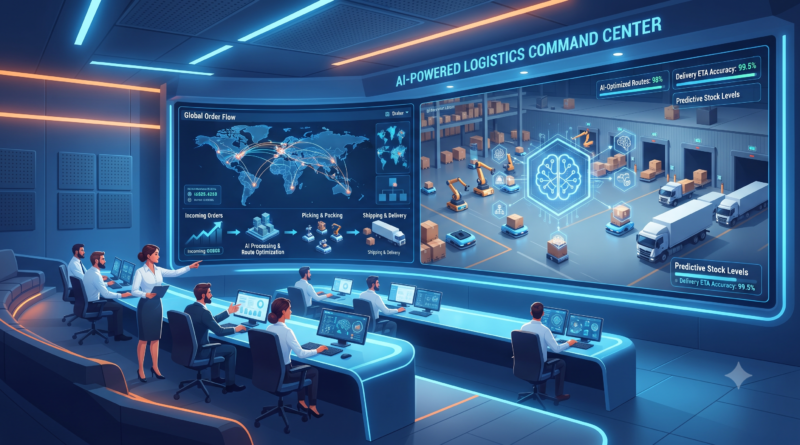
AI Order Management & AI Order Processing: The Complete Guide
Every business shares the same goal: delivering the right product to the right customer at the right time. That sounds simple — until you’re managing hundreds or thousands of orders across multiple sales channels. A single mistake can trigger shipping delays, inventory mismatches, and frustrated customers.
This is exactly why AI Order Management has become essential for modern businesses. By combining artificial intelligence, machine learning, and intelligent automation, companies can now automate repetitive tasks and make faster, more accurate decisions across the entire order lifecycle.
AI order management and AI order processing help businesses automate repetitive tasks, analyze order data, and make faster decisions throughout the order lifecycle. Instead of relying only on fixed rules and manual checks, AI can evaluate inventory, customer orders, warehouse capacity, shipping options, and demand patterns in real time.
Whether you sell through an ecommerce website, online marketplaces, mobile apps, or physical stores, keeping inventory synchronized across every channel is a constant challenge. Traditional systems often can’t keep up as order volume grows. Modern AI-powered order management platforms, on the other hand, continuously evaluate customer demand, stock levels, shipping options, and warehouse capacity in real time — helping businesses prevent problems before they happen, instead of reacting after the fact.
As customer expectations rise, basic order management software simply isn’t enough anymore. Intelligent systems improve order fulfillment, strengthen inventory management, optimize supply chain operations, and create a seamless experience from checkout to delivery reducing costs while improving customer satisfaction. They improve order handling, keep inventory more accurate, smooth out the supply chain, and make the whole journey from checkout to delivery feel simple instead of messy. Lower costs. Happier customers. That’s really it.
For business leaders, this matters a lot too, it means less time fixing order mistakes and more time focused on actually growing the business.
AI plays a key role in order processing by boosting both speed and accuracy. It takes over repetitive tasks, cuts down on manual work, and makes data analysis a whole lot easier
What Is AI Order Management?
Traditional order management systems were built to record and process orders using predefined rules and manual decisions. Today’s businesses need something more adaptive, because customer expectations change fast.
AI Order Management uses artificial intelligence to automate decision-making, optimize workflows, and improve efficiency across the full order lifecycle. Instead of simply tracking orders, it continuously learns from new data and recommends the most effective action.
Modern businesses generate massive amounts of operational data every second customer purchases, warehouse inventory, supplier updates, shipping delays, and seasonal demand shifts. An AI order management system connects all of this data and turns it into practical insights, using predictive analytics and decision intelligence to reduce delays, minimize errors, and deliver products faster.
What Is AI Order Processing?
AI order processing is the use of artificial intelligence to automate and optimize the steps involved in receiving, validating, managing, and fulfilling customer orders.
Traditional order processing often depends on predefined rules and manual checks. AI-powered systems can analyze order information, inventory levels, customer details, payment status, warehouse capacity, and shipping conditions to determine the appropriate next action.
A typical AI order processing workflow can include:
- Capturing the customer order
- Validating order and payment information
- Checking inventory availability
- Selecting the appropriate fulfillment location
- Routing the order
- Updating inventory
- Tracking shipment progress
- Handling exceptions and delays

How AI Improves Traditional Order Management
Conventional systems typically wait for employees to spot a problem before acting. If inventory runs low or a shipment is delayed, someone has to manually investigate and decide what to do next. This works fine for small businesses — but it breaks down as order volume scales.
AI-powered order management flips this model. It monitors every stage automatically and responds in real time as conditions change.
Example: Imagine an online retailer during a major holiday sale. Thousands of orders come in within hours. A traditional system processes them sequentially, creating bottlenecks and inventory conflicts. An AI-powered platform instantly analyzes warehouse capacity, shipping availability, customer location, and product demand — then selects the fastest fulfillment strategy without any manual intervention.
There’s also a compounding advantage: continuous learning. Every completed order teaches the system something new. Using self-learning algorithms, the platform recognizes buying patterns, predicts future demand, and recommends inventory adjustments before shortages occur — becoming more accurate over time.
AI Order Management vs. Traditional OMS
| Feature | Traditional OMS | AI Order Management |
|---|---|---|
| Decision Making | Rule-based | Real-time AI-driven decisions |
| Inventory Updates | Scheduled | Real-time visibility |
| Order Routing | Manual rules | Intelligent order routing |
| Demand Planning | Historical reports | Predictive demand forecasting |
| Customer Updates | Manual notifications | Automated, personalized updates |
| Error Detection | Reactive | Predictive and proactive |
| Business Growth | Limited scalability | High scalability through automation |
The biggest difference is adaptability. Traditional software follows fixed instructions. When something unexpected happens — bad weather, supplier shortages, sudden demand spikes — employees must manually adjust operations. An AI-driven system evaluates these situations automatically and recommends the best alternative, improving resilience and reducing avoidable delays.
Industry experts often describe this shift as moving from reactive management to predictive management. Instead of asking “what went wrong?”, businesses start asking “what’s likely to happen next?” — and that shift creates real competitive advantage.

“Artificial intelligence doesn’t replace good operations. It enhances them by helping businesses make faster, more informed decisions.”
How AI Order Management Works
Instead of treating every order as an isolated transaction, AI evaluates each order in context — inventory availability, customer expectations, warehouse workload, shipping capacity, and supplier performance — all supported by continuous analysis of real-time data.
Think of it as an experienced operations manager who never sleeps: reviewing thousands of data points every second, spotting emerging risks, and recommending the most efficient action.
AI Order Processing Workflow
The AI order processing workflow connects several stages of the order lifecycle. Each stage uses data from the previous step to support faster and more accurate decisions.
Order Capture → Validation → Inventory Check → Order Routing → Fulfillment → Shipment Tracking → Exception Handling
Order Capture
The system receives order information from websites, marketplaces, apps, or other sales channels.
Order Validation
AI checks customer, payment, product, and order information before processing continues.
Inventory Check
The system compares the order with real-time inventory data to determine product availability.
Intelligent Order Routing
AI evaluates warehouse location, stock levels, shipping costs, delivery expectations, and carrier performance to select an appropriate fulfillment option.
Fulfillment and Shipping
The selected warehouse processes the order while the system continues monitoring shipment progress.
Exception Handling
If a payment fails, inventory becomes unavailable, or a shipment is delayed, AI can identify the problem and recommend or trigger an appropriate action.
1. Order Capture and Processing
When a customer places an order through an ecommerce website, marketplace, mobile app, or physical store, the AI order processing system captures and validates the information. It can check payment status, product availability, customer details, and potential fraud indicators before the order moves to fulfillment.
The moment a customer places an order — whether through an ecommerce site, marketplace, app, or in-store — the system immediately captures and validates the information. AI checks payment status, product availability, customer details, and fraud indicators within seconds.
The platform then syncs this data across business systems through ERP, CRM, and API integrations, creating a single source of truth. Warehouse staff, customer service, finance, and logistics teams all work from the same real-time information, reducing miscommunication.
Because AI continuously analyzes order patterns, it can also flag suspicious transactions before products even leave the warehouse — protecting the business from fraud without slowing down legitimate customers.
2. Intelligent Order Routing and Fulfillment
Once an order is verified, the system determines the most efficient fulfillment path. Instead of fixed rules, AI weighs inventory levels, warehouse workload, shipping cost, carrier performance, customer location, and delivery time.
Example: A customer in Texas orders a product available in both California and Georgia warehouses. A traditional system might default to California. An AI-powered platform compares cost, speed, and carrier reliability — and ships from Georgia instead, because it’s faster and cheaper for that specific order.
This improves fulfillment optimization, inventory allocation, shipping cost, and last-mile delivery — customers get products faster, and businesses save on transportation.
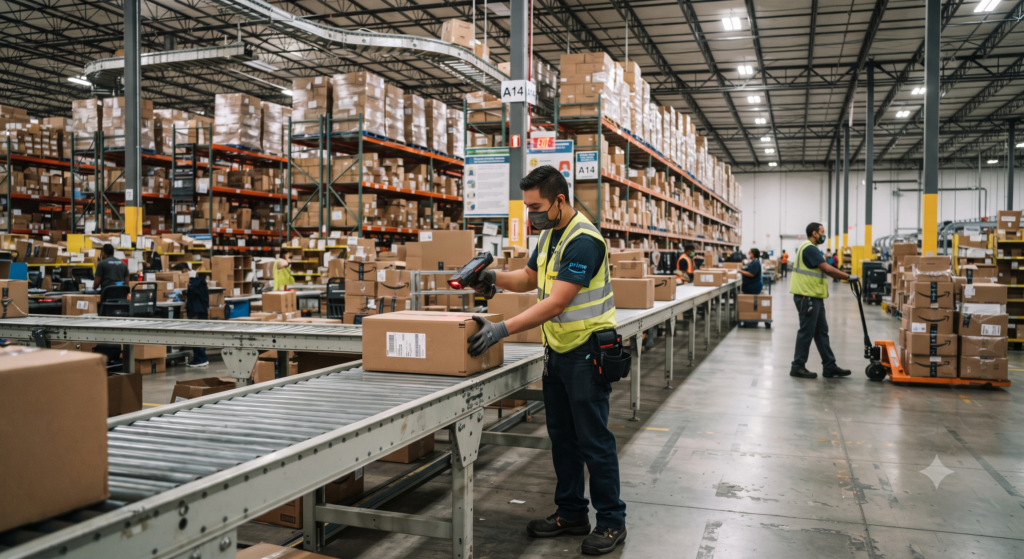
3. Automated Exception Handling
Even the best supply chain hits snags — delayed shipments, stockouts, failed payments. AI Order Management detects these issues immediately and recommends a fix, using intelligent automation to keep orders moving with minimal disruption.
For example, if a warehouse runs out of stock, the system automatically reroutes to another fulfillment center with available inventory — and updates the customer with accurate tracking information in real time, reducing support tickets and building trust.
Key Technologies Behind AI Order Management
- Machine Learning & Predictive Analytics – Machine learning studies historical sales, customer behavior, and inventory trends to improve future decisions. According to McKinsey’s research on AI in supply chain management, companies using advanced analytics report significant improvements in forecasting accuracy and inventory efficiency.
- Generative AI & AI Agents – Automates routine tasks like answering customer questions, generating reports, and managing order updates.
- Real-Time Data & Automation – AI dashboards and real-time analytics continuously monitor inventory, warehouse activity, and shipping progress, giving full supply chain visibility.

Top Benefits of AI Order Management
- Faster order fulfillment — AI picks the best warehouse, carrier, and route in seconds, cutting processing time.
- Improved inventory accuracy — Real-time tracking reduces stock errors, lost sales, and overstocking.
- Lower operational costs — Automation removes repetitive manual work and reduces costly mistakes.
- Better customer experience — Real-time tracking and proactive updates improve satisfaction and repeat purchases.
- Scalable operations — Businesses can handle growing order volumes without major operational overhauls.

AI Order Processing Software
AI order processing software combines order automation, inventory data, fulfillment workflows, analytics, and integrations in one system.
Depending on the platform, features may include:
- Automated order entry and validation
- Real-time inventory synchronization
- Intelligent order routing
- Predictive demand forecasting
- Automated customer updates
- Shipment and fulfillment tracking
- ERP, CRM, and API integrations
- Exception detection
- AI-powered reporting
AI Order Management Use Cases Across Industries
- Retail & Ecommerce – Omnichannel fulfillment, synchronized inventory across stores and online, reduced overselling.
- Manufacturing – Predicts material demand, supports procurement and supplier management, keeps production on schedule.
- Healthcare & Medical Supplies – Monitors critical inventory, reduces waste, ensures timely delivery of essential stock.
- Food & Beverage – Expiration tracking and delivery optimization to minimize spoilage on perishable goods.
- B2B Distribution – Automates bulk orders and streamlines fulfillment for stronger business relationships.

Challenges of Implementing AI Order Management
- Data quality & integration – AI depends on clean, accurate data; poor data limits prediction accuracy.
- Legacy ERP compatibility – Integrating AI with older systems may require additional customization.
- Change management – Employees need training and clear communication to adopt AI tools confidently.
- Transparency & security – Businesses should prioritize Explainable AI, cybersecurity, and privacy protection. Transparent decision-making builds trust while keeping sensitive business data secure — an area covered in depth in our guide on AI governance for strategic visibility.
Best Practices for Successful AI Order Management
- Choose the right AI platform – Look for a cloud-based OMS that supports ERP integration and future growth.
- Prepare high-quality data – Clean inventory, sales, and customer data lead to better predictions.
- Monitor performance and ROI – Track delivery speed, inventory accuracy, and customer satisfaction regularly.
AI Order Management Implementation Roadmap
If you’re planning to adopt an AI order management system, here’s a practical starting sequence:
- Audit your current systems – Identify gaps in your existing OMS, ERP, and inventory tools.
- Clean and centralize your data – Fix inconsistencies across sales channels before automation begins.
- Start with one use case – Pilot AI in a single area (e.g., order routing) before scaling company-wide.
- Integrate gradually – Connect ERP, CRM, and shipping systems step by step to avoid disruption.
- Measure and refine – Use dashboards to track KPIs and adjust the system based on real performance data.
Future Trends in AI Order Management
- Generative AI for order automation – Automating customer communication, order summaries, and support tasks.
- Predictive inventory management – Smarter demand prediction to prevent both stockouts and overstocking.
- AI-powered customer experience – Personalized updates, real-time tracking, and accurate delivery estimates.
- Ethical AI and data governance – Growing focus on transparency, privacy, and responsible AI practices.
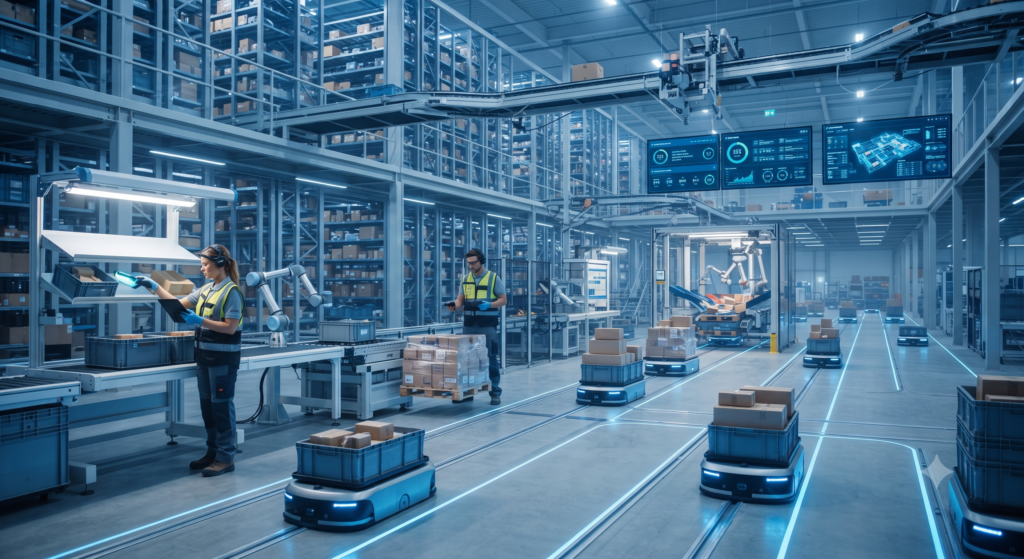
How to Choose the Right AI Order Management Solution
Essential features to look for:
- AI-powered order processing and predictive analytics
- Inventory management and shipment tracking
- Returns management and intelligent reporting
Integration requirements:
- ERP, CRM, and API integration for seamless data flow across departments
Scalability:
- A platform that supports growing order volumes and new sales channels without performance loss
Frequently Asked Questions About AI Order Management
What is AI order management?
AI Order Management uses artificial intelligence to automate order processing, optimize inventory, and support smarter decisions throughout the order lifecycle.
How does AI improve order fulfillment?
It analyzes inventory, warehouse capacity, and shipping options in real time to select the fastest, most cost-effective fulfillment route.
Can AI prevent inventory stockouts?
Yes. Through demand forecasting and predictive analytics, AI helps businesses replenish stock before shortages happen.
Is AI order management suitable for small businesses?
Yes. Many cloud-based solutions are affordable and scalable, letting smaller businesses compete with larger companies.
Which industries benefit most from AI order management?
Retail, ecommerce, manufacturing, healthcare, food and beverage, and B2B distribution all see significant gains in efficiency and accuracy.
Conclusion
Modern businesses need speed, accuracy, and flexibility to meet rising customer expectations. AI Order Management delivers this by combining machine learning, predictive analytics, and intelligent automation across the entire order lifecycle — from inventory planning to final delivery.
As technology continues to evolve, AI will play an even bigger role in supply chain and inventory management. Businesses that invest in the right AI order management system today will be better positioned to scale, adapt, and stay competitive in the years ahead.
Pingback: Why AI Is Considered Important for Business Leaders in 2026