

AI in Investment Banking:
The financial industry is experiencing a remarkable transformation as AI in investment banking becomes a driving force behind innovation and efficiency. Investment banks are increasingly using Artificial Intelligence to analyze vast amounts of financial data, identify market opportunities, and improve decision-making.
Technologies such as Machine Learning, Natural Language Processing (NLP), and Generative AI are helping institutions automate complex processes that once required significant human effort. As competition intensifies and markets become more dynamic, banks are embracing Predictive Analytics and AI-powered investment decisions to gain a strategic advantage. From risk assessment to client engagement, AI is reshaping traditional banking models and creating a smarter, faster, and more data-driven financial ecosystem.
What Is AI in Investment Banking and Why Does It Matter?
AI in Investment Banking refers to the use of intelligent computer systems that can analyze data, recognize patterns, predict outcomes, and support decision-making. Unlike traditional software that follows fixed instructions, AI systems continuously learn from new information. Through Machine Learning, Natural Language Processing (NLP), and Generative AI, banks can process vast amounts of information that would overwhelm human teams. This capability allows financial professionals to focus on strategy instead of repetitive tasks.
The importance of AI continues to grow because investment banking depends heavily on information. Every day, banks handle market reports, earnings releases, client communications, legal documents, and economic indicators. AI transforms these data streams into actionable insights. In an industry where seconds can influence millions of dollars, intelligent technology provides a powerful competitive edge.
Traditional Banking vs. AI-Powered Banking
| Function | Traditional Approach | AI-Powered Approach |
| Market Analysis | Manual research | Real-time analysis |
| Risk Assessment | Historical reviews | Predictive modeling |
| Compliance | Human monitoring | Automated monitoring |
| Client Service | Generic recommendations | Personalized insights |
| Reporting | Manual preparation | Automated generation |

How AI Is Transforming Traditional Investment Banking Operations
For decades, investment banking relied heavily on spreadsheets, human judgment, and labor-intensive processes. Today, AI is changing that reality. Through Banking Automation, banks can streamline workflows that previously consumed thousands of employee hours. Tasks such as document review, financial modeling, transaction monitoring, and data entry are increasingly handled by intelligent systems.
Another major transformation involves the broader movement toward Banking Digital Transformation. Modern institutions are integrating AI into front-office, middle-office, and back-office operations to connect data sources, improve collaboration, and create more responsive organizations.
Key Operational Improvements from AI
- Faster transaction processing
- Reduced operational costs
- Improved workflow efficiency
- Better data accuracy
- Enhanced customer experience

Key Applications of AI in Investment Banking
The practical applications of AI continue to expand across the financial sector:
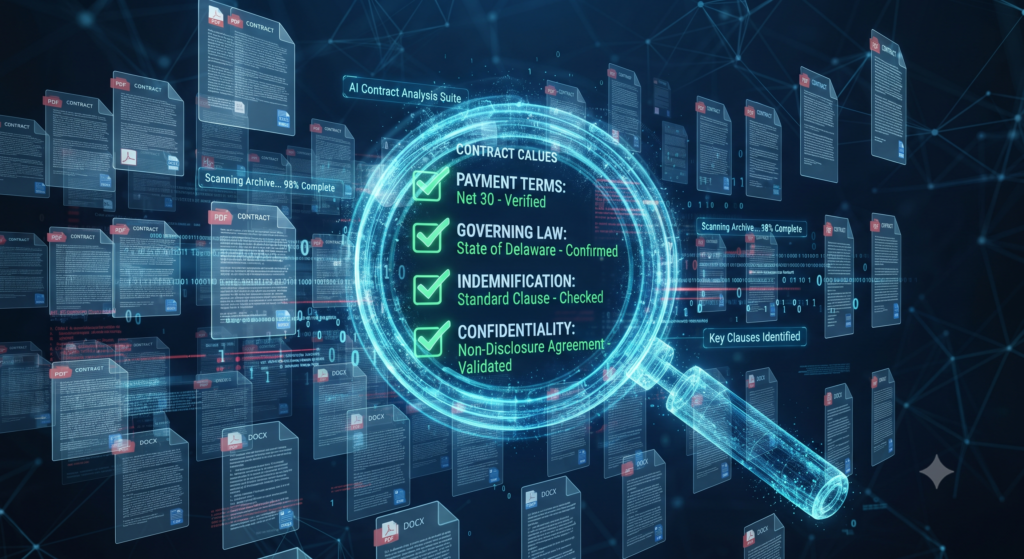
- Automated Due Diligence: During mergers, acquisitions, and financing deals, AI can review thousands of contracts and documents within minutes, providing immediate insights and accelerating decision-making.
- AI-Powered Research & Communications: Through Generative AI, banks can create market summaries, investment presentations, and financial updates quickly. Simultaneously, Natural Language Processing (NLP) helps institutions analyze news articles, earnings calls, and market commentary to deliver highly personalized services.
Common AI Applications in Investment Banking
| Application | Primary Benefit |
| Due Diligence Automation | Faster deal reviews |
| Research Automation | Improved productivity |
| Market Monitoring | Real-time intelligence |
| Client Analytics | Personalized services |
| Regulatory Reporting | Compliance efficiency |
| Financial Modeling | Better forecasting |
AI-Powered Financial Analysis and Market Forecasting
Modern investment banking generates enormous volumes of information. AI solves the challenge of processing market signals through advanced Financial Data Analysis and Predictive Analytics. By examining historical patterns, economic indicators, corporate filings, and transaction records, AI systems identify opportunities and risks with remarkable speed.
AI acts like an experienced navigator who can recognize changing weather conditions long before the storm becomes visible on the horizon. Although no model can predict markets perfectly, AI significantly improves forecasting accuracy.
“AI does not replace financial expertise. It amplifies it by transforming data into actionable intelligence.”

The Role of AI in Mergers and Acquisitions (M&A)
M&A activities are among the most complex in finance. Traditionally, teams of analysts spent weeks reviewing information. Today, AI is accelerating this process through automated due diligence, scanning thousands of files to highlight important clauses much faster than manual reviews. Furthermore, AI evaluates market conditions, company performance, industry trends, and growth potential simultaneously, allowing firms to discover acquisition opportunities that might otherwise remain hidden.
AI Benefits in M&A Transactions
- Target Screening: Faster identification.
- Due Diligence: Automated document review.
- Risk Assessment: Early issue detection.
- Financial Modeling: Improved valuation accuracy.
- Integration Planning: Better forecasting.
How Investment Banks Use AI for Risk Management and Compliance
Risk management is a cornerstone of banking, but traditional models often struggle with volatility. Through Intelligent Risk Assessment and Real-Time Risk Forecasting, AI continuously monitors financial activities to identify potential threats before they escalate.
Compliance is another area where AI delivers tremendous value. AI-powered systems automate data collection, analysis, and submission, improving reporting accuracy while reducing administrative burdens and the risk of costly compliance violations.
Risk Management Framework
- Credit Risk: Predictive scoring
- Market Risk: Real-time monitoring
- Operational Risk: Pattern detection
- Compliance Risk: Automated reporting
- Fraud Risk: Behavioral analysis

Benefits of AI in Investment Banking
The benefits extend far beyond automation. Institutions reduce costs while increasing productivity, and employees spend less time on repetitive activities and more time on strategic work. Clients also benefit from personalized recommendations based on risk tolerance and investment objectives, which fosters stronger relationships.
Despite the advantages, AI implementation is not without challenges. Integrating these systems requires more than just technical deployment; it demands a robust AI governance framework to ensure transparency, ethical AI usage, and strict compliance, which are essential for maintaining trust in financial services.
Challenges and Limitations of AI Adoption
Despite the advantages, AI implementation is not without challenges:
- Data Quality: Fragmented systems and “Data Silos” can make it difficult to establish a Single Source of Truth.
- Ethical Concerns: Issues such as Algorithmic Bias, fairness, and transparency require banks to prioritize Explainable AI and robust governance frameworks.
- Legacy Systems: Integrating AI into older banking infrastructure remains a significant technical barrier.

Future Trends Shaping AI in Investment Banking
- Generative AI Expansion: Enhanced capabilities for creating reports, summarizing research, and supporting knowledge management.
- AI-Driven Portfolio Management: Dynamic investment strategies that adapt in real-time to changing market conditions.
- Synthetic Data: Improved model training techniques that boost accuracy while protecting sensitive information.
Best Practices for Implementation
Successful AI adoption requires a five-phase approach:
- Data Preparation: Building a strong data foundation.
- Pilot Programs: Testing AI on specific, manageable use cases.
- Model Deployment: Scaling solutions effectively.
- Governance Monitoring: Ensuring transparency and compliance.
- Continuous Optimization: Refining models based on real-world feedback.
Frequently Asked Questions
Is AI replacing investment bankers?
No. AI supports professionals by automating routine tasks. Human expertise remains essential for strategy, client relationships, and complex decision-making.
How does AI improve regulatory reporting?
AI automates data collection, validation, and report generation, significantly improving speed and reducing compliance errors.
What is explainable AI in financial services?
Explainable AI refers to systems that provide transparent reasoning behind their decisions, making outcomes easier for analysts and regulators to understand and trust.