How to Scale Your Marketing with AI: Proven Strategies for Faster Business Growth
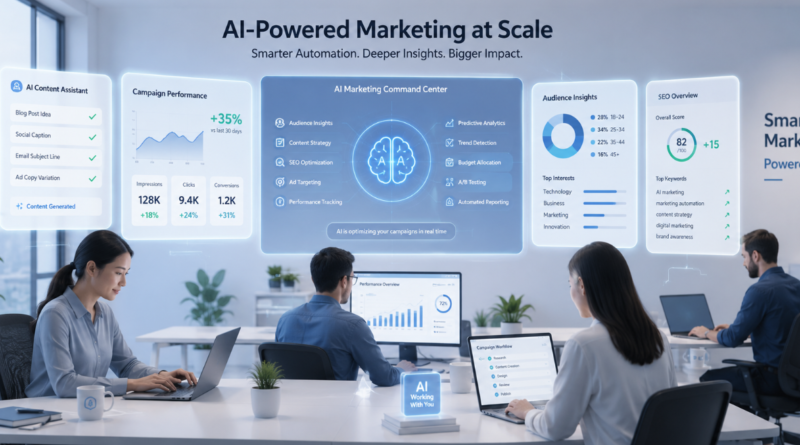
How to scale your marketing with AI is the question keeping a lot of founders up at night right now. Your goals keep getting bigger, yet your team stays roughly the same size. That gap between ambition and capacity is the real problem facing most businesses today. Demand grows quicker than headcount ever can, and that mismatch eventually stalls growth no matter how talented your people are. Learning how to scale your marketing with AI has stopped being a nice-to-have and turned into a basic survival skill for companies competing in 2026.
This isn’t about chasing shiny software for the sake of it. It’s about solving a real, practical bottleneck. When you understand how to scale your marketing with AI properly, you stop trading hours for output and start building systems that produce results on their own. AI lets you generate more campaigns, more content, and more personalized touchpoints without pushing your existing team past its limits. Businesses that figure out how to scale your marketing with AI early tend to pull ahead of competitors still stuck doing everything by hand.
This guide breaks down the real, practical steps behind that shift. You’ll see where AI delivers the fastest wins, how to avoid the mistakes that trip up most teams, and how to measure whether any of it is actually working.
What Scaling Marketing with AI Actually Means
Scaling isn’t about hiring a dozen new marketers overnight. It’s about handing repetitive work to smart systems built for volume. Picture it as bringing on extra hands that never need a lunch break or a day off. AI marketing automation absorbs the dull, repeatable tasks first, things like tagging leads, scheduling posts, or sorting email lists. Your people get to spend their energy on strategy and original ideas instead of clicking through the same checklist every morning. That single shift changes the entire pace of growth for a business.
People often mix up automation with intelligence, but they aren’t the same thing at all. Automation just repeats a set instruction over and over, exactly the same way each time. Intelligence studies outcomes and adjusts its approach on its own, learning from what worked and what flopped. A genuine AI-driven marketing strategy blends both traits together into one system. It clears the busywork off your plate first. It also studies your results continuously and sharpens future decisions based on real patterns, not guesswork. That pairing of speed and learning is what actually builds scalable marketing systems worth trusting long term.
It’s worth noting that scale doesn’t mean sacrificing quality either. A common fear among marketing leaders is that automation will make everything feel robotic and impersonal. In practice, the opposite tends to happen when the system is set up correctly. Because AI handles volume, your human team gets more time to focus on the details that actually shape quality, like tone, timing, and creative direction. The result is often more polished output, not less, simply because nobody is stretched too thin to care about the finer points anymore.

Why Traditional Marketing Structures Limit Business Growth
Most legacy marketing setups rely on a single person owning a task from beginning to end. The instant that person takes a sick day, goes on vacation, or gets buried under other priorities, the whole workflow stalls. That one point of failure creates recurring bottlenecks across the pipeline. A single delayed sign-off can stall a campaign for days or even weeks, depending on how many approvers are in the chain. Growth can’t outrun a system that leans on a small group of overworked people trying to do too much at once.
Speed takes just as big a hit as reliability. A single marketing email might pass through five different people, a writer, an editor, a designer, a manager, and a compliance checker, before it ever lands in a customer’s inbox. Each additional handoff adds friction to something that should move fast. These fragmented setups tend to buckle under sudden demand, like a holiday surge or an unexpected viral spike. That fragility is a big reason companies are turning to AI-driven workflows instead of simply hiring more people to cover the gaps.
There’s also a cost that never shows up on a spreadsheet: opportunity lost to slowness. While a traditional team is still chasing sign-offs through email chains, a competitor already running on automation may have launched, tested, and refined three campaign versions in the same window. Speed builds on itself. A company that ships marginally faster every week can pull dramatically ahead within a year, because every small delay in an old-fashioned process compounds across dozens of campaigns.
Get Your Data in Order Before You Automate Anything
Understanding how to scale your marketing with AI starts long before you install any new tool — it starts with your data. Disorganized records generate disorganized results, regardless of how sophisticated the software layered on top might be. A clean customer data platform functions like a foundation under a house: every other system depends on it holding steady. Skip that step and automation won’t fix your errors, it’ll amplify them, potentially firing off broken messages to thousands of contacts instead of a handful.
Start small rather than trying to fix everything simultaneously:
- Remove duplicate contacts in your CRM — they’re a common cause of the same customer receiving conflicting messages.
- Standardize segment labels so they stay consistent across every platform your team uses.
- Centralize your data source so every tool pulls from the same record instead of keeping its own separate list.
Don’t Blame the AI for Problems That Start with Bad Data
Teams that skip this step often end up blaming the AI itself when results disappoint. It’s an easy mistake to make, since a poor output naturally points suspicion at the tool that produced it.
Look closer, though, and the actual culprit is almost always inconsistent formatting, stale contact records, or duplicate entries sending conflicting signals into the same system. Cleaning up your data first isn’t glamorous work, but it’s exactly what separates AI tools that deliver real results from AI tools that just generate new problems at a faster pace.

The Key Areas Where AI Scales Marketing Fastest
AI doesn’t deliver equal value across every part of marketing, so it helps to know where to focus first. Certain functions see faster payoffs than others, and chasing the wrong priority can waste months of setup time. Content, email, paid ads, support, lead scoring, and reporting stand out as the six strongest opportunities for most businesses right now. Each of these areas has a clearly defined task that AI can improve almost right away, without months of custom configuration. Companies that start here tend to see returns much sooner than those trying to automate everything at once.
Take a support chatbot as one example of quick, visible impact. It can field a customer question at three in the morning without waking a single employee or forcing anyone to check their phone. Lead scoring software can flag your strongest prospects without a rep manually reviewing every submitted form line by line. That blend of speed and precision explains why AI-driven campaign optimization performs so well in these particular functions compared to more abstract, strategic work. The table below offers a quick look at where the fastest wins tend to show up across a typical marketing team.
| Marketing Area | What AI Handles | Typical Impact |
| Content | Drafts, outlines, repurposing | Faster production |
| Segmentation, send-time optimization | Higher open rates | |
| Paid Ads | Bid adjustments, targeting | Lower cost per lead |
| Support | Chatbots, FAQ automation | Faster response time |
| Lead Scoring | Behavior tracking, prioritization | Better sales handoff |
| Reporting | Real-time dashboards | Faster decisions |
Once one of these areas is running smoothly, the next one tends to fall into place faster. Teams often find that lessons learned automating email, like how to structure prompts or set review checkpoints, transfer directly into setting up ad optimization or reporting dashboards. This is why starting narrow and expanding gradually usually beats trying to automate every department in the same month.

Content Production Becomes Scalable Through AI-Assisted Creation
A blank page can eat up an entire afternoon before a single word gets written, and that delay adds up fast across a busy content calendar. AI clears that obstacle almost instantly. It can produce a rough draft of product copy, a blog outline, or a batch of social captions within minutes rather than hours. This isn’t about pushing writers out the door or replacing creative judgment. It’s about giving them a running head start on the parts of the job that used to feel like a grind. AI-assisted content creation simply speeds up that painful first-draft stage so your team can spend more time refining and less time staring at a cursor.
Human review still carries real weight, though, and skipping it shows almost immediately. Text written entirely by AI can come across flat or generic without a skilled editor’s touch guiding the final version. A real person adds humor, nuance, and a layer of authenticity that machines still struggle to fake convincingly. Treat AI like a research assistant gathering raw material for you, not a finished author. Your team then shapes that material into something that genuinely sounds like your brand’s voice and reflects its actual values. This balance keeps content production efficiency high while protecting the overall quality readers have come to expect.
Repurposing is another area where this approach pays off quietly but consistently. A single long blog post can become five social captions, a short email, and a script outline for a video, all within the same afternoon. Doing this manually used to take a content team days of extra work. With the right AI-assisted workflow, that same output becomes a same-day task, which means your best ideas reach more channels before they go stale.
Personalization at Scale: Email, Ads, and Customer Journeys
Firing off one generic email to your entire list rarely gets strong results anymore, and readers can usually tell within seconds when a message wasn’t built with them in mind. Customers expect messages built around their own behavior and interests, not a one-size-fits-all blast sent to everyone at once. Personalized marketing at scale relies on behavioral data to sort customers into meaningful groups automatically, without a marketer manually building each list by hand. Someone who abandoned a cart should receive a different follow-up message than someone who just completed a purchase last week.
The same logic carries over into advertising campaigns as well. Dynamic ad personalization displays different products to different shoppers based on what they’ve already browsed or clicked on previously. It starts to feel less like an intrusive ad and more like a helpful suggestion from someone who actually knows the customer’s taste. One mid-sized online retailer saw a clear jump in email click-through rates after moving away from blanket blasts toward behavior-based segments built with an automated tool. Small adjustments like this often snowball into significant gains over time, especially once they’re applied across every stage of the customer journey rather than just one campaign.
Timing plays a bigger role in personalization than most teams realize at first. Sending the right message to the right segment still falls flat if it arrives at the wrong moment, buried under a dozen other notifications. AI systems that track engagement patterns can learn when a specific customer segment is most likely to open an email or respond to an ad, then schedule delivery accordingly. This kind of fine-tuning used to require a dedicated analyst watching dashboards all day. Now it happens automatically in the background, adjusting itself as new data comes in.

Predictive Analytics Improves Marketing Decisions Before Campaigns Launch
Guesswork carries a real price tag, especially once ad budgets start climbing into serious territory. Predictive analytics in marketing strips out a large portion of that uncertainty before you spend a single dollar on a new campaign. These tools study historical campaign data and forecast likely outcomes ahead of time, based on patterns that would take a human analyst weeks to spot manually. That means a weak campaign concept can get flagged and reworked before real budget goes toward it, rather than after the money’s already spent.
Predictive systems also identify customers showing early signs of churn, often well before any obvious red flag appears in their account activity. That early warning gives your team a real window to step in with a retention offer or a check-in message before losing that relationship entirely. A marketing operations lead summarized this well during a recent industry discussion, noting that forecasting mostly buys teams time rather than certainty. That extra runway often ends up being the biggest advantage of all, since even a rough prediction gives a team days or weeks to act instead of reacting after the fact.
Forecasting also helps with budget allocation across channels, which is often one of the hardest calls a marketing lead has to make each quarter. Instead of splitting spend evenly or relying on last year’s numbers, predictive tools can flag which channel is likely to perform best given current trends. This doesn’t remove the need for human judgment entirely, but it does turn a rough guess into an informed bet backed by actual data.
How to Build an AI Marketing Workflow, Step by Step
Setting up an AI workflow doesn’t need to feel overwhelming, even for a team that’s never touched these tools before. Begin with a plain audit of your current tasks, writing down everything your team does in a typical week. Which activities eat up the most hours without producing much strategic value? From there, link your data sources so every tool draws from the same clean pool of information discussed earlier. Handling this step early prevents most of the problems teams run into once automation is fully live.
Once that’s sorted, put together a shared prompt library your whole team can pull from instead of everyone writing instructions from scratch each time. Set clear system instructions so the tone and quality stay consistent across every campaign, regardless of which team member is running it. Then fold these tools directly into the platforms your team already uses daily, rather than forcing everyone onto a brand-new system that adds another login to remember. Revisit results every quarter and tweak anything underperforming, treating the workflow as a living process rather than a one-time setup. This steady, repeatable rhythm forms the backbone of any lasting marketing automation strategy that actually survives contact with a busy quarter.
Documentation matters more than most teams expect during this process. Writing down which prompts work well, which tools handle which tasks, and who reviews what before it goes live turns a fragile system into something the whole team can maintain, even if the original person who set it up moves to a different role. Skipping this step often means the workflow quietly falls apart within a few months, simply because nobody else understood how it was built.

Keeping Your Brand Voice Consistent When Using AI
Left on default settings, AI writing can sound flat and forgettable fast, blending in with the flood of similar content already online. That kind of robotic tone chips away at reader trust over time, even if nobody can quite explain why a piece of writing feels off. The fix isn’t complicated, though it does take some upfront effort. Feed the system your brand guidelines, sample copy, and actual customer language before asking it to generate anything new, so it has real examples to draw from instead of generic defaults.
Review every draft before it ever goes live, without exception, no matter how polished it looks on the first pass. This human checkpoint is what protects your brand’s unique personality from getting smoothed over into something generic. Skipping it is one of the quickest ways to erode the trust readers have built with you over months or years of consistent messaging. Solid human oversight in AI content keeps your voice steady even as your total output climbs far beyond what your team could produce manually on its own.
A useful habit here is keeping a running style sheet, a short document listing words your brand avoids, phrases it favors, and examples of tone done well. Feeding this into your AI tools alongside your usual prompts keeps outputs aligned even as new team members join and start using the system themselves.
Measuring AI Marketing ROI
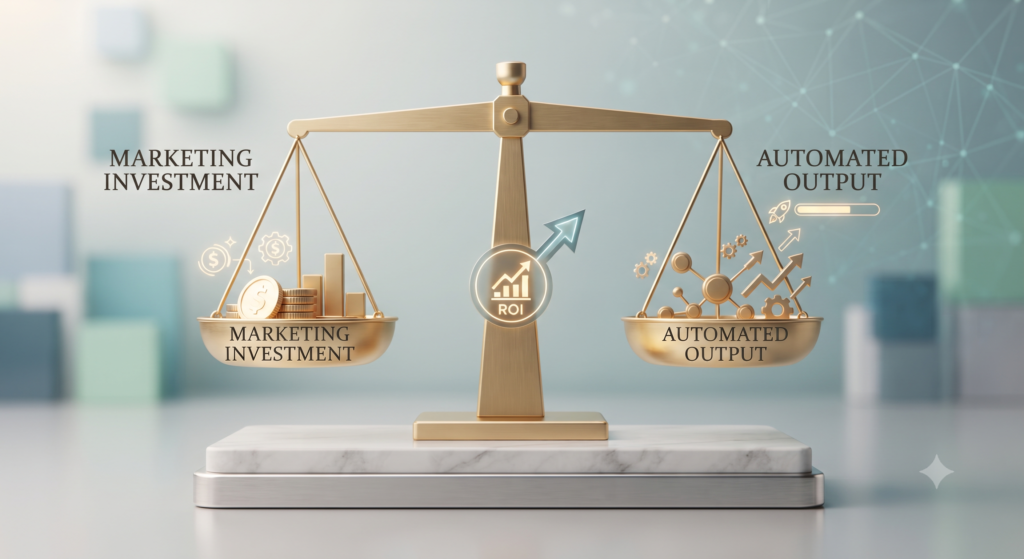
Numbers reveal the honest picture, even when a tool feels impressive during a demo or sales pitch. Track cost per lead, conversion rate, and hours saved both before and after rolling out AI tools, so you have a clear before-and-after comparison instead of a vague impression. If a tool isn’t moving those numbers within a single quarter, it may not be earning its keep, regardless of how many features it advertises. Clear metrics stop your team from overspending on tools that only look impressive on paper or in a sales demo.
A basic ROI dashboard makes this tracking painless once it’s set up correctly. Weigh monthly output against the actual hours your team invests running and reviewing each tool. Compare campaign costs from before automation against costs after, using the same time period each quarter for a fair comparison. This kind of disciplined marketing ROI improvement tracking keeps your AI spending grounded in real business outcomes, not just shiny features and marketing hype pushed by software vendors trying to close a sale.
Beyond the obvious metrics, it’s worth tracking a softer number too: how your team feels about the workload. A tool that saves hours on paper but adds stress through constant babysitting or error-fixing isn’t delivering real ROI, even if the spreadsheet says otherwise. The best AI investments tend to reduce both cost and friction at the same time.
Common Mistakes to Avoid When Scaling with AI
The most common misstep is automating far too much, far too quickly, without giving the team time to adjust or spot problems early. Some teams strip out human review entirely in the rush to save time, and output quality drops almost immediately as a result. Another frequent error involves skipping the data cleanup step covered earlier in this guide, treating it as optional rather than foundational. That shortcut tends to resurface weeks later, usually at the worst possible moment, like right before a major product launch.
Jumping on every new AI tool that launches is another trap worth avoiding, no matter how tempting the latest release looks. New platforms appear constantly, promising to solve problems the current stack already handles fine. Switching too often just creates confusion across the team and wastes time on retraining everyone from scratch. It’s wiser to master a small handful of reliable tools first, learning their quirks and limitations thoroughly. Expand slowly, and only once your current AI marketing infrastructure feels stable and well understood by everyone touching it day to day.
A quieter mistake worth mentioning is treating AI output as automatically correct simply because it sounds confident. AI tools can present incorrect statistics or made-up details with the same fluent tone as accurate information. Building a habit of double-checking facts, figures, and claims before publishing protects both your credibility and your customers’ trust, and it costs far less time than fixing a public correction later.

The Long-Term Competitive Advantage of AI-Driven Marketing
Companies that adopt AI early tend to build advantages that compound year after year, rather than staying flat. Faster testing cycles lead directly to faster learning, since more experiments fit into the same amount of time. Lower cost per lead frees up budget for bigger, bolder bets that a tighter budget wouldn’t have allowed otherwise. Sharper targeting cuts down on wasted spend across every channel a business runs, from search ads to social campaigns.
Competitors still leaning entirely on manual processes will find it harder to keep pace over time, even if they’re working just as hard as everyone else. The gap between AI-enabled teams and traditional ones tends to widen each year, much like a snowball picking up size and speed as it rolls downhill. Businesses committing to business growth with AI today are quietly setting themselves up for a far stronger position down the road, long before the gap becomes obvious to competitors still catching up.
This advantage isn’t only about cost or speed either. Teams that build strong AI habits early also build institutional knowledge, a real sense of what works, what doesn’t, and how to fix problems quickly. That kind of experience is difficult for a late-adopting competitor to copy overnight, even with access to the same tools.
Frequently Asked Questions
What marketing tasks can AI automate? AI can manage email segmentation, ad bidding, chat support, content drafts, and reporting dashboards. Most repetitive tasks make strong candidates for automation, especially anything involving sorting, scheduling, or pattern recognition.
How long does it take to implement AI marketing systems? Basic setups can be running within a few weeks. Full integration across every channel usually takes a few months to complete properly, especially if data cleanup is needed first.
Do small businesses benefit from AI marketing tools? Yes. Many tools are designed specifically for small teams and scale up naturally as the business expands, without requiring a large upfront investment.
Is AI replacing marketing professionals? Not really. AI takes over repetitive tasks, while humans continue guiding strategy, creativity, and brand voice, which remain difficult for software to replicate convincingly.
How does AI reduce marketing costs? It trims wasted ad spend through sharper targeting and cuts down the hours needed for manual, repetitive tasks, freeing up budget and time for higher-value work.
What is the biggest challenge in adopting AI for marketing? Poor data quality usually causes the most friction, closely followed by resistance to changing familiar workflows that teams have relied on for years.
Conclusion
Scaling your marketing with AI was never about replacing your team. It’s about clearing away the busywork that keeps growth stuck in place, one repetitive task at a time. Clean data, smart automation, and consistent human review are what make this shift actually work in practice, not just on paper. Pick one workflow and start there this week, rather than trying to overhaul everything at once. The rest of your growth tends to follow naturally once that first step is in motion.