
How Can an AI Search Monitoring Platform Improve SEO Strategy?
Search has changed faster in the last two years than it did in the previous ten. If you still judge SEO by rankings alone, you are probably missing half the picture. Users now get answers from AI Overviews, AI-generated answers, chat-style results, and other AI-powered search results before they ever click a blue link. That means your brand can influence a search outcome without getting a visit. It also means you can lose visibility long before your traffic report tells you something is wrong.
That is exactly why more teams are asking a sharper question: how can an AI search monitoring platform improve SEO strategy in a world shaped by AI search monitoring, AI search visibility, and zero-click search? The short answer is simple. It gives you a way to see where your content, brand, and expertise appear inside modern search experiences. It shows what traditional dashboards miss. It helps you spot visibility loss, protect brand authority, and build an AI SEO strategy that works across classic rankings and AI-driven discovery.
Why SEO Monitoring Needs to Change in the Age of AI Search
The old SEO model was built around a neat chain of events. A page ranked, a user clicked, analytics recorded the visit, and the SEO team optimized from there. That model still matters, but it no longer tells the whole story. Today, Google, large language models, and other answer engines can read several sources, synthesize them, and present a polished response without sending the user anywhere. Your content may shape the answer, yet your traffic graph stays flat. On the other hand, your rankings may look healthy while your brand quietly disappears from AI summaries and LLM-generated responses. That is a dangerous blind spot.
This shift changes what “visibility” means. In classic SEO, visibility mostly meant position on a results page. In AI search, visibility also means appearing in AI Overviews, being cited in LLM citations, being named in a summary, or being recognized as the source behind a trusted explanation. In other words, SEO is moving from a click-only model to an influence model. If you are not measuring that influence layer, you are trying to steer a car while looking only in the rear-view mirror.
What Is an AI Search Monitoring Platform?
An AI search monitoring platform is a system that tracks how your brand, pages, products, and topics appear across AI-shaped search experiences. It does not stop at keyword rankings. It looks at whether your content is being surfaced in AI-generated answers, whether your brand earns brand mentions, whether your pages are referenced in AI Overviews, and whether your business is showing up as a credible entity in AI-driven results. Think of it as a visibility radar for the modern search environment. Traditional tools tell you where you rank. This platform tells you whether AI systems are actually using you.
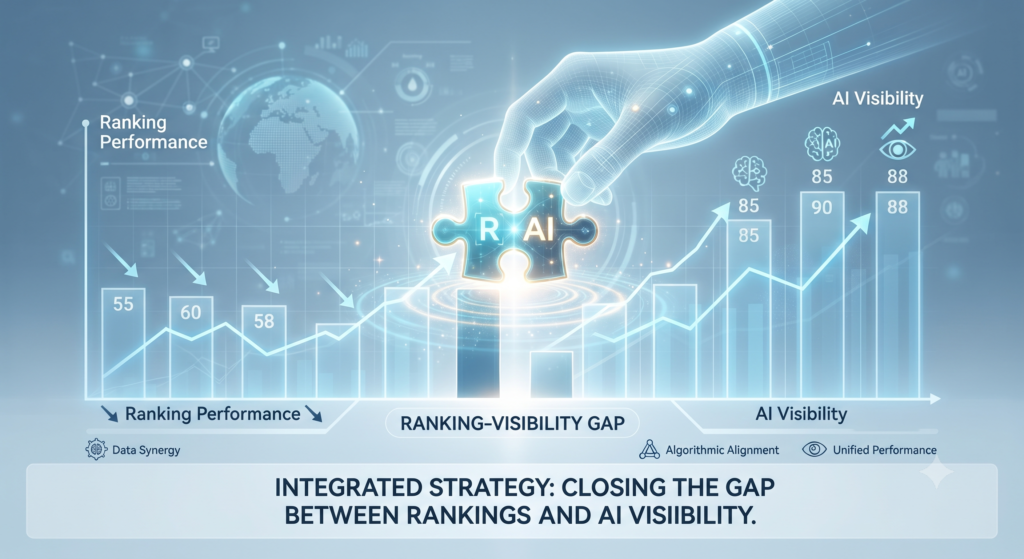
That difference matters more than it sounds. A normal rank tracker may tell you that your article moved from position four to position three. Helpful, yes. But it cannot always tell you that a competitor is being cited in the summary above the results, or that an AI system is now answering the query with a synthesized paragraph that never mentions your brand at all. AI visibility tracking fills that gap. It shows how your content performs across AI-driven search monitoring surfaces, not just on the old scoreboard. For modern teams, that turns monitoring from a reporting task into strategic infrastructure.
How AI Search Has Fragmented SEO Visibility
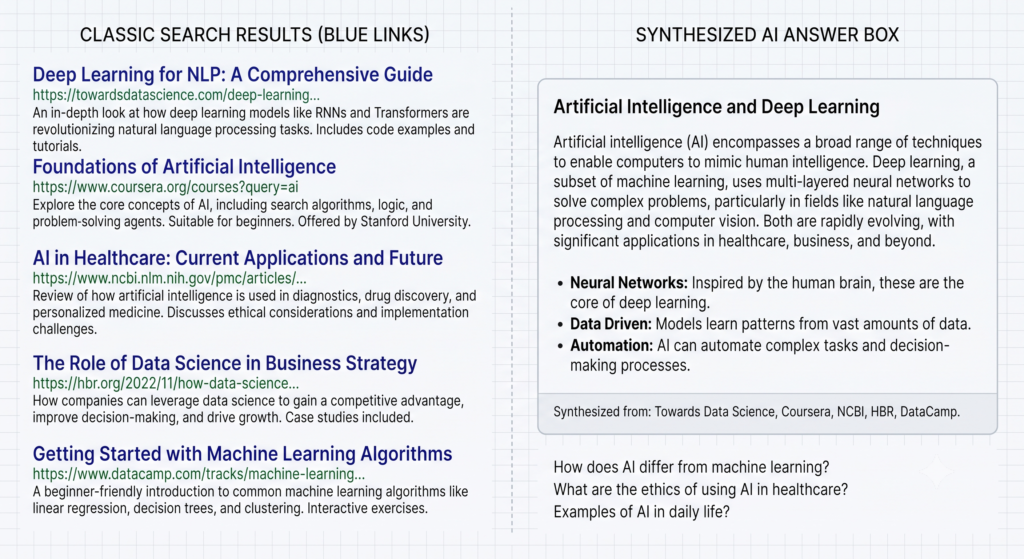
SEO visibility used to live on a fairly predictable page. Now it lives everywhere at once. A user might see a classic search result, an AI Overview, a comparison box, a shopping module, a forum snippet, or a chat-style summary that combines multiple sources. That fragmentation matters because it breaks the old assumption that rankings alone equal discoverability. You can rank well and still be absent from the answer that users actually read. You can also be summarized, paraphrased, or cited in a way that shapes the user’s decision without producing a click. That is why AI search visibility is not just an extension of old SEO reporting. It is a different measurement problem.
This is where the phrase “visibility outside owned properties” becomes useful. Your website is still the home base, but your search presence now extends into places you do not control. AI systems can reference your framework, mention your brand, or associate your company with a topic without sending the user to your page. That sounds unfair at first. In some ways, it is. Yet it is also the new reality of AI-mediated discovery. Brands that understand this stop treating SEO as a simple traffic machine. They start treating it as a broader system of search influence monitoring, authority building, and answer-level visibility.
What an AI Search Monitoring Platform Actually Tracks
A good platform tracks the obvious things first. It monitors whether your pages or brand appear in AI Overviews, AI summaries, and other synthesized answers tied to your target topics. It can show which prompts trigger your presence, which pages get cited, how often you appear over time, and where competitors are displacing you. That alone is useful because it reveals a layer of performance that standard SEO dashboards often miss. If your article keeps appearing in AI-generated summaries for a high-value topic, that is not a vanity metric. It is evidence that AI systems trust the page enough to use it as an answer ingredient.
The smarter platforms go further. They track LLM citations, brand references, and entity recognition patterns across multiple AI surfaces. They show whether your company is associated with the right concepts, whether your content is repeatedly used in certain topic clusters, and whether your visibility is stable or fragile. They can also reveal implicit signals that do not generate clicks at all. For example, your brand might appear in a buying guide summary, be referenced in an AI comparison, or be associated with a product category in a way that nudges future demand. That is why AI-powered SEO monitoring is not just a prettier reporting layer. It is a way to measure the influence your content has before traffic and revenue fully show up.
How an AI Search Monitoring Platform Improves SEO Strategy
The most immediate benefit is speed. A platform built for AI search monitoring can detect visibility loss before rankings collapse or traffic falls off a cliff. Imagine your content still holds a strong organic position, but it disappears from AI-generated answers that now dominate the top of the results page. A normal rank report may stay calm. Your business should not. Monitoring AI visibility gives you an early warning signal. It tells you that your authority, freshness, or relevance may be slipping in the places users actually see first. That shortens the gap between problem and response, which is gold in competitive search environments.
The second benefit is clarity. When you can see which pages AI systems trust, cite, or summarize, your AI SEO strategy gets sharper. Instead of guessing what “helpful content” means, you can look for patterns. Maybe your research pages earn more citations than short blog posts. Maybe your glossary content performs well because it answers questions cleanly. Maybe your comparison pages win because they match intent better. This is where search influence monitoring becomes practical rather than theoretical. It helps you decide what to update, what to expand, what to merge, and what to leave alone. In large organizations, it also reduces decision latency because teams are no longer arguing over incomplete signals.
Using AI Search Monitoring to Improve Content Strategy
Content strategy becomes much smarter when you can see which pages have lost AI visibility and which pages keep getting pulled into answer generation. A page may still rank and still get some traffic, yet its role in AI search may be fading because the information is stale, the structure is weak, or the topic intent has shifted. Monitoring helps you catch that drift. It highlights pages that used to be referenced but no longer are. It also surfaces topics where competitors are now winning the answer layer. That turns content planning into something more surgical. You are not just publishing more. You are repairing influence where it matters.
It also helps solve a quieter problem that hurts many sites: overlap. Large websites often publish multiple pages around similar keywords, each one chasing a slightly different angle. To a human editor, that can look like healthy coverage. To an AI system, it can look messy. Competing pages split authority, blur topical ownership, and weaken content authority. An AI monitoring platform can expose that confusion by showing which pages are cited, which are ignored, and where intent drift is causing mixed signals. That insight supports better consolidation, stronger content hubs, and cleaner content strategy at scale. In plain English, it helps you stop stepping on your own toes.

How AI Search Monitoring Supports Enterprise SEO at Scale
The larger the site, the more painful the visibility problem becomes. Enterprise brands manage huge content libraries, multiple markets, separate product lines, and distributed teams that all publish under the same umbrella. In that setting, old-school monitoring starts to crack. One team may celebrate stable rankings in the US while another team quietly loses AI search visibility in the UK. A regional team may update pages for traffic, while the global team is trying to protect brand authority in AI search. Without a shared system, the reporting turns into a patchwork quilt. Everyone has data. Nobody has the whole story.
That is where enterprise SEO monitoring earns its keep. A strong platform gives large teams a common visibility model across markets, topics, and search surfaces. It supports SEO governance by showing where content is inconsistent, where brand references vary, and where entity recognition is strong in one market but weak in another. It also makes cross-team decisions faster. Editorial teams can see which assets deserve updates. Technical teams can see whether important pages are crawlable, indexable, and easy for systems to interpret. Leadership can finally compare performance in one language instead of five disconnected dashboards. That is not glamorous work, but it is how scalable SEO actually gets done.
Key SEO Metrics and Signals to Monitor in AI Search
The first metric category is direct answer visibility. You want to know how often your brand or content appears in AI-generated answers, AI Overviews, summaries, and answer-style modules tied to your target topics. That includes frequency, trend direction, and competitive share. A single appearance means little on its own. Repeated presence across a topic cluster is far more valuable because it suggests durable trust. If your content keeps surfacing for a set of commercial queries, that is a sign your pages are being treated as reliable source material. In the age of AI visibility tracking, that matters as much as a position report.
The second category is authority and influence signals. That includes brand mentions, LLM citations, citation frequency, and entity recognition around the themes you want to own. Stability matters here too. A brief spike can be noise. Consistent inclusion over time is a stronger signal of authority. Smart teams also compare visibility stability against short-term growth. Sometimes a flashy traffic jump hides weak long-term footing. By contrast, steady answer-level visibility can indicate healthy search equity even before traffic catches up. This is why influence measurement is becoming such an important part of modern SEO reporting. It gives you a way to measure presence before the click, not just after it.
How AI Search Monitoring Connects SEO to Business Outcomes
The board does not care whether your article moved from position seven to five unless that movement changes something that matters. That is why the real value of AI search monitoring appears when you connect visibility to business outcomes. If your brand begins disappearing from AI summaries around high-intent topics, demand can erode before traffic numbers make the problem obvious. Users may still be searching. They are just seeing someone else’s answer first. A monitoring platform helps you spot that kind of performance degradation early. It gives you time to update pages, defend your topic ownership, and reduce SEO risk management headaches before the pipeline feels the hit.
It also improves prioritization. When you can see where AI visibility is growing, where citations are slipping, and which topic clusters are becoming more competitive, you can make better budget decisions. You can forecast which updates are likely to protect search equity, which content programs deserve investment, and where technical work will have the biggest impact. For enterprise teams, that is a major advantage because it turns SEO from a reactive channel into a planning function. You are no longer saying, “Traffic dropped, now we should investigate.” You are saying, “Influence is weakening in this category, so we should act before revenue feels it.” That is a much better sentence to say in a leadership meeting.
What to Look for in an AI Search Monitoring Platform
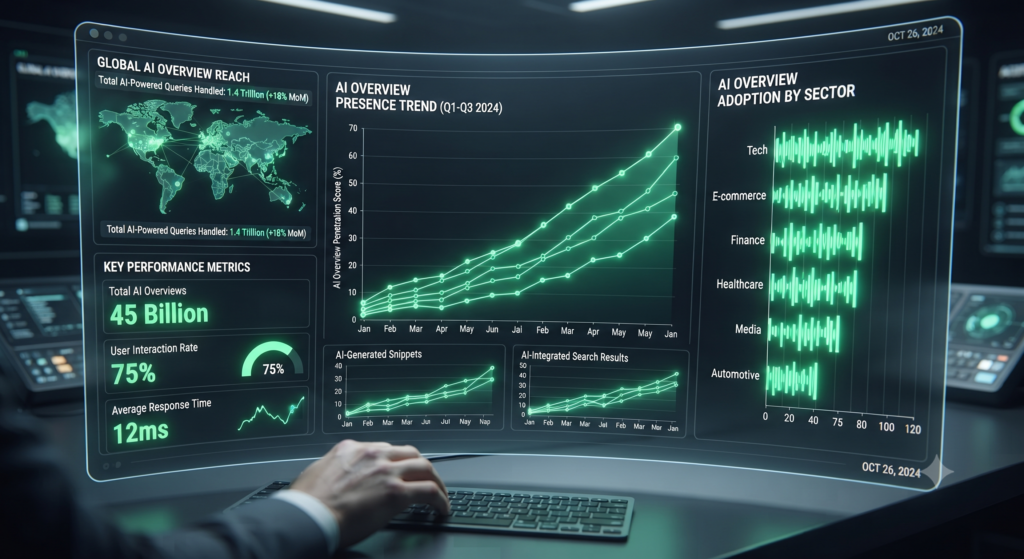
Coverage comes first. A useful platform should monitor more than one surface and more than one type of AI answer. It should track AI Overviews, summary-style results, brand mentions, citation patterns, and visibility trends over time. It should also let you compare performance by market, query set, topic cluster, and competitor. If the platform only shows isolated screenshots of AI answers, that is not enough. You need trends, not souvenirs. You need to know whether your presence is growing, shrinking, or wobbling around like a shopping cart with one bad wheel.
Actionability matters just as much as coverage. The best platforms do not simply say, “Your visibility changed.” They help explain why. They surface the pages that lost presence, the topics where competitors gained ground, and the content types that AI systems seem to trust. For enterprise use, workflow integration is another big deal. If a platform cannot fit into reporting, planning, and content operations, it becomes shelfware. Look for tools that support enterprise SEO, cross-team reporting, and practical recommendations for content, technical SEO, and competitive monitoring. A monitoring platform should not just collect dust and charts. It should help people make better decisions on Tuesday morning.
Traditional SEO Monitoring vs AI Search Monitoring
The easiest way to understand the shift is to compare what each model actually sees. Traditional tools are still valuable, but they are built for a search world where the click was the center of gravity. AI monitoring expands the field of vision.
| Capability | Traditional SEO Monitoring | AI Search Monitoring Platform | Why It Matters |
| Keyword rankings | Tracks positions in classic SERPs | Tracks rankings plus AI search visibility context | Rankings alone no longer reflect full visibility |
| Traffic correlation | Measures visits and conversions after clicks | Measures answer-level presence before clicks happen | Helps detect problems earlier |
| AI Overviews presence | Usually weak or missing | Tracks appearance in AI Overviews and summaries | Shows visibility in modern search interfaces |
| Brand mentions | Rarely central to reporting | Tracks brand mentions and brand references in answers | Reveals influence beyond owned pages |
| LLM citations | Not designed for this | Tracks LLM citations and referenced pages | Helps identify trusted content |
| Entity signals | Often indirect | Surfaces entity recognition and topical associations | Supports authority-building strategy |
| Multi-surface reporting | Mostly search-engine focused | Monitors multiple AI-driven search surfaces | Better for fragmented discovery paths |
A Practical Example of How This Plays Out
Imagine a software company that ranks well for “customer onboarding automation.” Its core guide sits in the top five and has done so for months. On paper, everything looks fine. Then Google starts showing richer AI-generated answers for that query, summarizing best practices and naming competing tools. The company’s article still ranks, but it no longer shapes the answer. Traffic softens a little. Branded search stays flat. Nothing looks dramatic enough to trigger panic. Six weeks later, demo requests start to slide.
With a proper SEO monitoring platform built for AI search, that team would have seen the warning earlier. They would have noticed that competitors were being cited in the AI layer, that their own content was no longer earning LLM citations, and that the answer format had shifted toward comparison-heavy guidance. That insight could have prompted a faster update: add clearer implementation examples, strengthen the comparison section, refresh proof points, improve structure, and consolidate overlapping pages. In other words, the platform would not magically fix SEO. It would simply show the truth sooner. In SEO, sooner is often the whole game.
Why AI Search Monitoring Is Becoming Essential for SEO Strategy
The case for AI monitoring is not that traditional SEO has died. It has not. Rankings, technical health, internal linking, and content quality still matter a great deal. The case is that old reporting now creates blind spots when used on its own. If users are seeing AI-powered search results before they ever reach your page, then your SEO strategy needs a way to measure that layer. Otherwise, you are optimizing for a search journey that no longer exists in full. That is why the question how can an AI search monitoring platform improve SEO strategy is really a question about visibility itself. What do you count, and what do you ignore?
The answer is becoming clearer every month. Teams that monitor AI visibility can react faster, update content more intelligently, and connect SEO work to real business risk. They can protect brand authority, improve content performance in AI search, and make smarter decisions across large websites. Most importantly, they can see whether they are influencing the answers users actually consume. In a world of zero-click search, AI-generated answers, and fragmented discovery, that is no longer a nice extra. It is part of the job description.
Frequently Asked Questions About AI Search Monitoring
What is an AI search monitoring platform?
An AI search monitoring platform is a tool that tracks how your brand, pages, and topics appear across AI-shaped search results such as AI Overviews, summaries, answer modules, and other AI-generated answers. It expands traditional reporting by measuring visibility, citations, mentions, and influence beyond classic rankings.
How does AI search monitoring improve SEO strategy?
It improves strategy by showing what standard rank tracking misses. You can spot visibility loss, find pages that AI systems trust, track LLM citations, monitor AI search visibility, and respond faster when competitors begin owning the answer layer for valuable topics.
Does AI search monitoring replace rank tracking?
No. It adds a new layer rather than replacing the old one. Rank tracking still matters because rankings still drive traffic. AI search monitoring complements that data by showing how your brand performs inside AI-powered search results and zero-click search experiences.
Can AI search monitoring help with content optimization?
Yes. It helps identify which pages are being cited, which ones have lost answer-level visibility, and where content overlap is weakening authority. That makes it easier to update content for relevance, clarity, trust, and stronger entity-based SEO signals.
Is AI search monitoring only useful for enterprise SEO teams?
No, smaller teams can benefit too, especially in competitive niches. But the value becomes even greater in enterprise SEO monitoring because large sites, multi-market content, and distributed teams create more chances for hidden visibility problems, inconsistent governance, and slow decision-making.
Final Thoughts
So, how can an AI search monitoring platform improve SEO strategy? By showing you the parts of search that traditional reporting cannot fully see. It helps you monitor AI search monitoring signals, understand AI search visibility, track LLM citations, protect brand authority, and act before visibility problems turn into traffic problems. It moves SEO closer to the real search experience your audience now has.
If modern search is a stage, rankings are no longer the whole performance. They are only the spotlight. The script, the supporting cast, and the applause now happen in AI answers too. An AI search monitoring platform helps you watch the entire show instead of guessing from the parking lot.