
AI expansion in government in 2026
AI expansion in government in 2026 is changing how public institutions serve people, make decisions, and deliver essential services. This shift is no longer a future ambition because it has become a practical reality across federal, state, and local agencies. Today, it supports faster services, smarter planning, and stronger security.
As more governments invest in Government AI Transformation, Artificial Intelligence (AI), and Digital Government, citizens experience quicker responses and more reliable public services. From processing permits within minutes to predicting infrastructure failures before they happen, AI expansion in government in 2026 is reshaping the relationship between governments and the people they serve.
This shift is driven by rising public expectations, better technology, and the growing need for efficient governance. It also helps agencies manage increasing workloads without dramatically expanding budgets. Most importantly, it allows governments to focus more on solving complex problems rather than spending valuable time on repetitive administrative tasks.
The transformation reaches far beyond simple automation. Governments now combine Public Sector AI, AI-powered Citizen Services, and Government Modernization to improve every layer of public administration. Imagine visiting a government website where a virtual assistant answers your questions instantly or applying for a business license that is approved within hours instead of weeks. These improvements are becoming common because agencies are integrating Machine Learning, AI Agents, and Generative AI into everyday operations. Rather than replacing public employees, these technologies help them work faster, reduce errors, and provide more personalized support. The result is a government that becomes more responsive, transparent, and prepared for future challenges.
What AI Expansion in Government Means in 2026
At its core, AI expansion in government in 2026 refers to the widespread adoption of intelligent technologies throughout public institutions. Instead of using AI only for isolated pilot projects, governments now embed Government AI, AI Deployment, and AI Infrastructure into daily operations. Agencies analyze massive amounts of Government Data, automate repetitive workflows, and support policy decisions with predictive insights. This evolution marks a major step in government digital transformation, where technology becomes part of every department instead of remaining an isolated innovation.
Modern governments also embrace Explainable AI (XAI) and Human-in-the-loop (HITL) models to ensure transparency and accountability. AI systems can recommend actions or detect patterns, yet trained professionals continue making the final decisions when public safety, legal matters, or sensitive citizen information is involved. This balanced approach strengthens trust while allowing agencies to benefit from faster processing, smarter analytics, and more accurate forecasting. In many ways, AI has become the operating system behind a more intelligent public sector rather than simply another software tool.
| Government AI in the Past | Government AI in 2026 |
|---|---|
| Limited pilot projects | Enterprise-wide AI adoption |
| Manual paperwork | Intelligent workflow automation |
| Separate agency databases | Cross-agency Data Integration |
| Reactive decision-making | AI-driven Policy and predictive insights |
| Slow citizen services | AI-powered Citizen Services |
Why Governments Are Accelerating AI Adoption
Governments face growing expectations from citizens who already enjoy fast digital services from banks, retailers, and healthcare providers. They naturally expect the same convenience from public agencies. This demand encourages leaders to invest in government AI adoption, AI implementation strategy, and AI automation in government. Whether someone renews a driver’s license, applies for disaster assistance, or files taxes, AI helps reduce waiting times while improving service quality. Faster processing also lowers operational costs, creating benefits for both governments and taxpayers.
Economic competitiveness plays another important role. Countries that build strong National AI Strategy initiatives strengthen innovation, improve productivity, and attract technology investment. Governments understand that AI is becoming as important as electricity or broadband once was. For this reason, agencies invest in enterprise AI infrastructure, government AI strategy, and AI operating model development to modernize public administration. A government that embraces intelligent technologies today is better prepared to respond to future economic, environmental, and security challenges.
“Artificial intelligence should enhance public service by making governments more efficient, transparent, and responsive while keeping humans accountable for critical decisions.”
Key AI Trends Driving Government Expansion in 2026
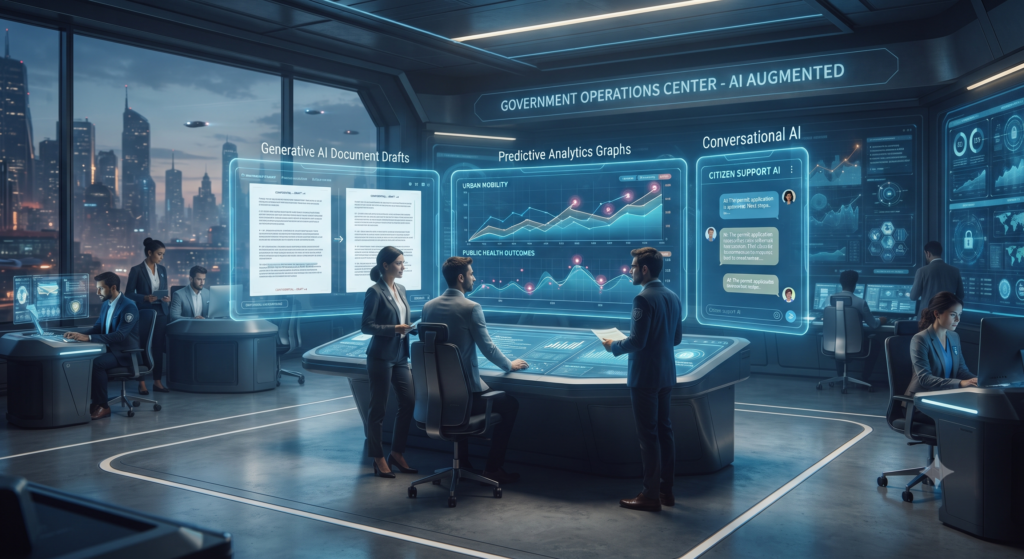
Several technologies are shaping the next generation of public administration. Generative AI now helps draft policy documents, summarize legislation, translate government communications, and assist public employees with daily research. Meanwhile, AI Agents perform repetitive administrative tasks automatically, allowing civil servants to focus on strategic work. Governments increasingly use AI-powered workflows, conversational AI, and AI assistants to improve communication with citizens around the clock. These systems reduce bottlenecks without sacrificing quality or accuracy.
Another significant trend involves predictive intelligence. Agencies analyze AI-powered analytics, predictive analytics, and real-time data to identify fraud, forecast natural disasters, optimize transportation systems, and improve emergency response. Instead of reacting after problems occur, governments can anticipate challenges before they escalate. This proactive model transforms public administration from reactive management into intelligent planning. As AI ecosystem technologies continue evolving, governments move closer to creating an AI-native government where every department shares data securely and collaborates through connected digital platforms.

Major AI Trends in Government for 2026
| Trend | Government Impact |
|---|---|
| Generative AI | Faster document creation and citizen communication |
| AI Agents | Automated administrative tasks |
| Predictive Analytics | Better forecasting and planning |
| AI-powered Analytics | Smarter policy decisions |
| Conversational AI | 24/7 citizen support |
| Cross-agency Data Integration | Unified public services |
| AI-powered Workflows | Higher operational efficiency |
Mini Case Study: Smarter Emergency Response
Imagine a hurricane approaching the U.S. coastline. Instead of relying only on historical reports, emergency agencies combine AI analytics, Government Data, weather forecasts, satellite imagery, and transportation information into one intelligent platform. The AI predicts evacuation routes, estimates shelter capacity, identifies vulnerable communities, and recommends where emergency supplies should be sent first. Officials still make the final decisions, yet they now work with timely insights instead of fragmented information. This practical example shows why Public Sector AI is becoming an essential tool for protecting lives while improving government efficiency.
Government AI Investment, Infrastructure, and Spending in 2026
Government investment in AI has shifted from experimentation to long-term planning. Around the world, national and local agencies are expanding AI Infrastructure, Government AI Platform, and National AI Infrastructure to support secure and scalable services. In the United States, agencies continue investing in cloud computing, high-performance processors, and modern data centers to strengthen government digital transformation. These investments are not only about buying new technology. They also focus on creating reliable systems that can support millions of citizens every day. As this transformation continues, governments recognize that modern infrastructure is the backbone of every successful AI initiative.
Another major priority is building Sovereign AI capabilities. Governments want greater control over sensitive information and critical digital assets. This is why Sovereign Cloud, Hybrid Cloud, and On-premise AI solutions are becoming increasingly popular. Instead of depending entirely on third-party providers, agencies are creating secure environments that protect Government Data, maintain Data Sovereignty, and comply with national regulations. Strong infrastructure also enables faster deployment of AI Models, improves system resilience, and supports future innovation across every ministry and public institution.
| Investment Area | Purpose | Expected Benefit |
|---|---|---|
| AI Infrastructure | Modern computing resources | Faster AI deployment |
| Sovereign Cloud | Secure government data | Greater digital sovereignty |
| Data Infrastructure | Unified information systems | Better decision-making |
| Enterprise AI Infrastructure | Scalable AI services | Improved government efficiency |
| AI Compute | High-performance processing | Faster analytics and automation |
AI Applications Transforming Public Services
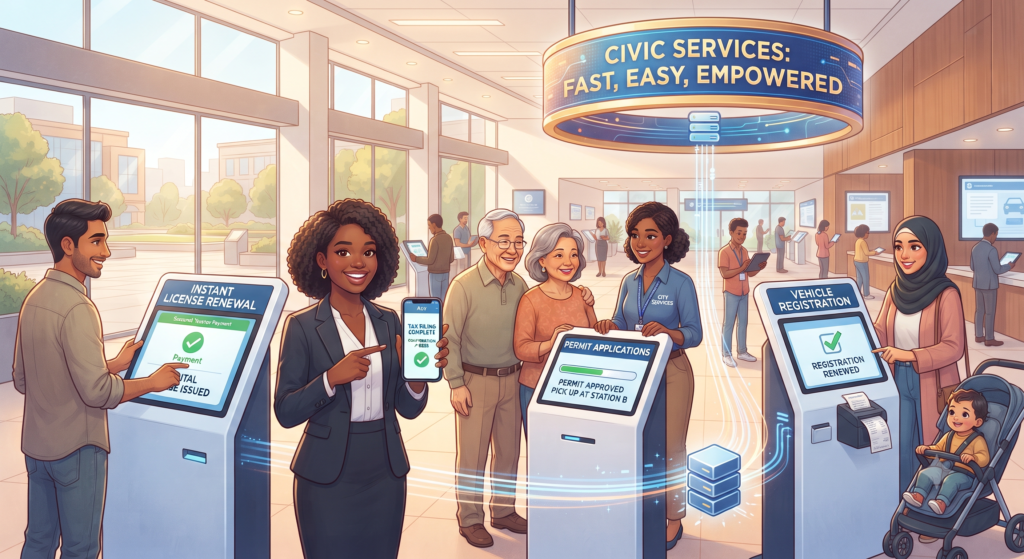
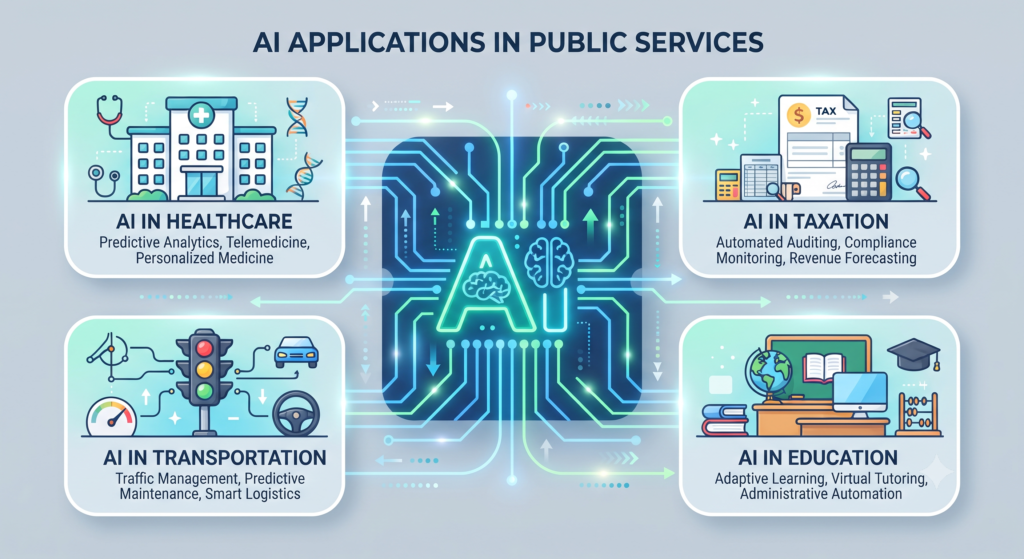
Citizens are already seeing the benefits of AI-powered Citizen Services in everyday life. Public agencies use AI Automation, Machine Learning, and AI-powered Workflows to process permits, answer public inquiries, detect tax fraud, and improve healthcare administration. Instead of waiting weeks for simple approvals, many citizens now receive updates within hours. This transformation improves the overall Citizen Experience while allowing government employees to concentrate on more complex responsibilities.
Healthcare offers one of the strongest examples of AI’s impact. Hospitals supported by government agencies use AI Analytics, Predictive Analytics, and Operational Intelligence to forecast patient demand and manage medical resources more efficiently. Transportation departments analyze traffic patterns to reduce congestion, while education agencies personalize learning resources for students. Law enforcement organizations apply AI-powered Analytics to identify crime trends without replacing human judgment. Across every sector, this expansion demonstrates how intelligent technologies improve service quality while making public spending more effective.
Examples of AI Across Public Services
| Government Sector | AI Application | Public Benefit |
|---|---|---|
| Healthcare | Predictive patient management | Better healthcare planning |
| Taxation | Fraud detection | Increased revenue protection |
| Transportation | Smart traffic systems | Reduced congestion |
| Education | Personalized learning | Improved student outcomes |
| Emergency Services | Disaster prediction | Faster emergency response |
| Justice | Document analysis | Reduced case processing time |
Real-World Example: AI in Tax Administration
Several tax authorities now use Machine Learning and AI-powered Analytics to identify unusual filing patterns that may indicate fraud. Rather than reviewing every return manually, investigators receive prioritized cases based on intelligent risk analysis. Honest taxpayers experience faster refunds while enforcement teams focus their attention where it matters most. This approach improves both efficiency and fairness.
AI Governance, Security, and Regulatory Compliance
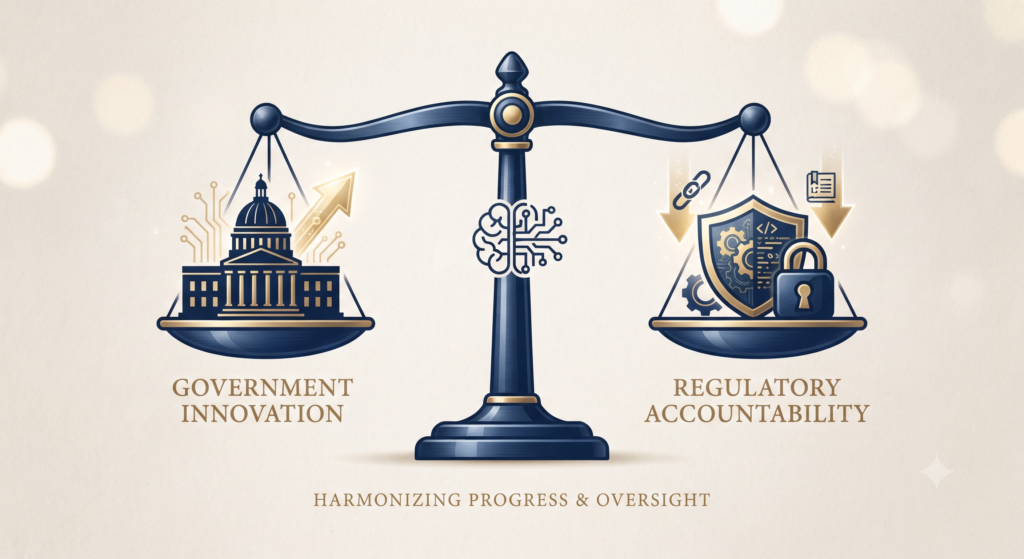
Powerful technology also demands responsible oversight. Governments cannot simply deploy AI without establishing clear rules for transparency, accountability, and privacy. This is where AI Governance, Responsible AI, and Explainable AI become essential. Agencies increasingly require AI systems to explain how recommendations are generated, especially when decisions affect healthcare, public benefits, employment, or legal outcomes. Citizens deserve understandable decisions rather than mysterious algorithms.
Security remains equally important. Governments manage enormous volumes of confidential information, making AI Risk Management, AI Compliance, and AI Monitoring central components of every deployment. Agencies follow evolving standards such as the EU AI Act, GDPR, and national privacy regulations while implementing Audit Logging and continuous monitoring systems. Together, these safeguards help protect public trust. As this transformation accelerates, success depends not only on smarter algorithms but also on ethical governance that balances innovation with accountability.
| Governance Principle | Why It Matters |
|---|---|
| Explainable AI | Builds public trust |
| Responsible AI | Reduces unintended bias |
| AI Governance Framework | Standardizes oversight |
| AI Compliance | Meets legal requirements |
| Audit Logging | Improves accountability |
| AI Monitoring | Detects system issues early |
“Public trust is earned when governments explain how AI supports decisions instead of expecting citizens to accept automated outcomes without question.”
Challenges Slowing AI Expansion in Government
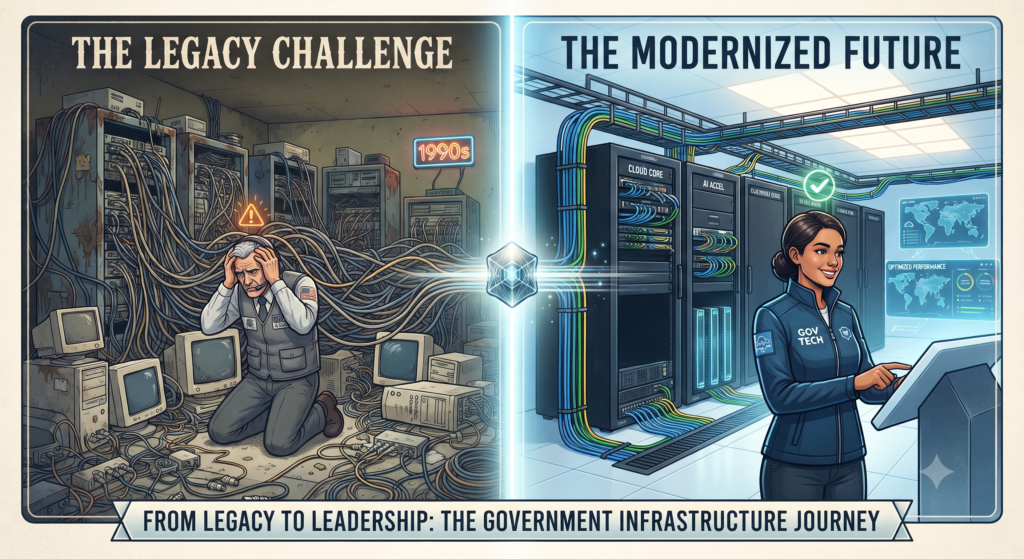
Although progress is impressive, governments still face significant barriers. Many agencies operate on outdated software that was never designed for intelligent automation. Legacy systems make AI Integration, Data Integration, and AI Deployment more complicated and expensive. Some organizations also struggle with fragmented databases that prevent smooth Cross-agency Data Integration. Without clean and connected information, even the most advanced AI models cannot produce reliable results. These technical challenges often slow the pace of adoption, especially for smaller agencies with limited resources.
Workforce readiness presents another challenge. Successful AI programs require skilled employees who understand technology, policy, and public administration. Governments therefore invest in AI Readiness, AI Adoption Roadmap, and continuous workforce development. Ethical concerns also require careful attention. Agencies must address algorithmic bias, protect personal privacy, and ensure that AI supports rather than replaces human judgment. By combining strong governance with ongoing training, governments can overcome these obstacles and build AI systems that remain trustworthy, secure, and beneficial for every citizen.
Common Challenges and Practical Solutions
| Challenge | Practical Solution |
|---|---|
| Legacy systems | Modernize infrastructure gradually |
| Poor data quality | Improve Data Governance practices |
| Skills shortage | Expand AI workforce training |
| Privacy concerns | Strengthen AI Governance policies |
| Public trust | Use Explainable AI and transparency |
| Budget limitations | Prioritize high-value AI projects |
| Regulatory complexity | Develop clear AI Policy Frameworks |
Mini Case Study: Modernizing a State Government
A U.S. state government wanted to introduce AI into its licensing department. The first attempt failed because information was stored across several disconnected databases. Instead of abandoning the project, the agency created a Unified Data Platform, improved Data Lineage, and established clear governance standards. Once the data foundation was ready, AI successfully automated document verification and reduced processing times by more than half. The lesson was simple: successful AI begins with strong data, not just advanced software.
Best Practices for Successful Government AI Implementation
Successful AI expansion in government begins with a clear vision rather than expensive technology. Governments that achieve lasting results first develop a government AI strategy, identify high-value services, and create a practical AI implementation roadmap. Instead of introducing AI across every department at once, agencies start with projects that solve real problems. For example, automating document processing or improving fraud detection delivers quick wins while building confidence among employees and citizens. This phased approach supports Government AI Transformation without disrupting daily operations.
Leadership also plays a vital role. Every successful initiative needs an effective AI governance framework, measurable goals, and continuous evaluation. Governments should establish an AI operating model that defines responsibilities, security standards, and performance indicators before deployment begins. Employees must receive regular training because AI works best when people understand how to use it responsibly. As this transformation continues, organizations that combine skilled teams with modern technology will deliver faster services and earn greater public trust.
A Practical AI Implementation Roadmap
| Phase | Key Activity | Expected Outcome |
|---|---|---|
| Assessment | AI use case audit | Identify high-impact opportunities |
| Strategy | Create an AI transformation roadmap | Clear priorities and governance |
| Infrastructure | Build enterprise AI infrastructure | Reliable and scalable systems |
| Deployment | Launch AI-powered workflows | Improved operational efficiency |
| Monitoring | Measure KPIs and compliance | Continuous improvement |
The Future of AI Expansion in Government Beyond 2026
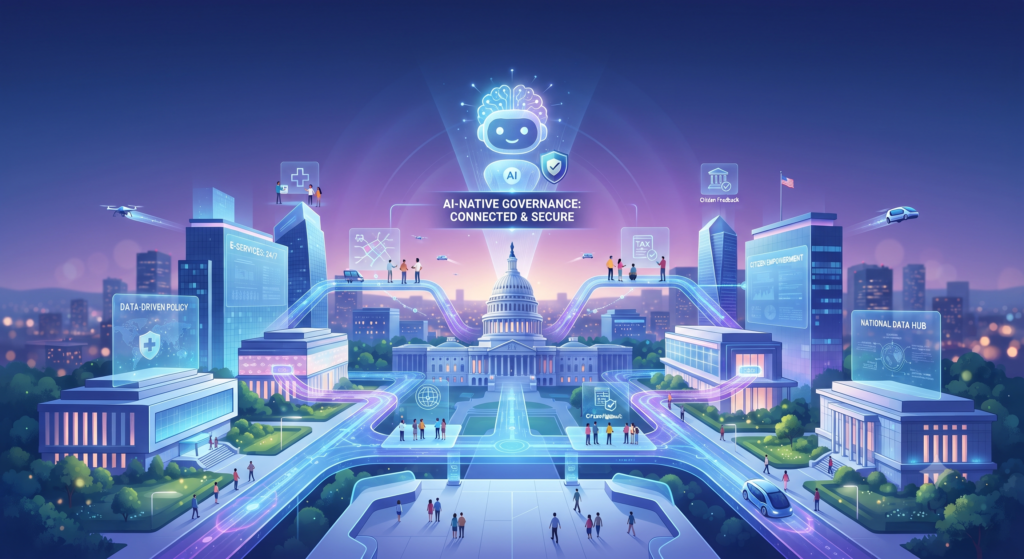
The future of government AI extends well beyond automation. Agencies are moving toward AI-enabled government, where intelligent systems support nearly every public function. AI assistants will help employees analyze complex legislation, while conversational AI will provide personalized support to citizens at any hour. Governments are also investing in AI-first architecture and AI-native government models that integrate technology into every department rather than treating AI as a separate project.
Looking ahead, collaboration will become even more important. Secure digital public infrastructure, stronger government technology strategy, and advanced AI ecosystem partnerships will allow agencies to share knowledge without compromising privacy. Human expertise will remain essential because AI cannot replace empathy, ethical judgment, or democratic accountability. Instead, this shift marks the beginning of a long-term transformation where technology empowers public servants to make faster, smarter, and more informed decisions for the communities they serve.
Future Outlook
| Emerging Trend | Expected Impact |
|---|---|
| AI Agents | Greater workflow automation |
| Domain-specific AI Models | Better policy recommendations |
| AI Copilots | Higher employee productivity |
| Digital Public Infrastructure | Connected government services |
| Government Innovation | Faster modernization |
| Intelligent Government | Better citizen outcomes |
FAQ
What is AI expansion in government?
AI expansion in government in 2026 refers to the growing use of Artificial Intelligence (AI) across public institutions to improve services, automate administrative work, strengthen policy development, and support better decision-making. It transforms traditional government operations into more efficient and data-driven systems.
Why are governments investing heavily in AI in 2026?
Governments invest in AI because it improves operational efficiency, reduces costs, enhances citizen satisfaction, and strengthens national competitiveness. AI also helps agencies process information faster while delivering more responsive digital public services.
What are the biggest AI governance trends for 2026?
The leading trends include stronger AI Governance, wider adoption of Explainable AI, greater emphasis on Responsible AI, enhanced AI Monitoring, and compliance with evolving regulations such as the EU AI Act and national AI policies.
How is AI improving public services?
AI improves AI citizen services by reducing waiting times, automating routine tasks, enhancing fraud detection, supporting emergency response, optimizing transportation systems, and helping healthcare providers allocate resources more efficiently.
What challenges do governments face when adopting AI?
The biggest challenges include outdated technology, fragmented Government Data, workforce skill gaps, cybersecurity risks, privacy concerns, and ensuring transparency in automated decision-making.
Which countries are leading government AI adoption?
Countries such as the United States, Singapore, the United Kingdom, Canada, South Korea, the United Arab Emirates, and Estonia continue to lead through strong National AI Strategy, digital infrastructure, and long-term investment in Public Sector AI.
Will AI replace government employees?
No. AI is designed to support employees rather than replace them. Routine administrative work becomes automated while public servants focus on complex decisions, citizen engagement, policy development, and oversight through Human-in-the-loop (HITL) practices.
What is Sovereign AI, and why is it important?
Sovereign AI allows governments to develop and operate AI systems using secure national infrastructure while maintaining control over Government Data, Data Sovereignty, and critical digital assets. This approach strengthens national security, protects sensitive information, and reduces dependence on external providers.
Conclusion
AI expansion in government in 2026 is redefining how public institutions operate and serve their communities. From intelligent infrastructure and AI-powered public administration to secure AI Governance and modern Government AI Platforms, governments are building a future where services become faster, smarter, and more accessible. Success, however, depends on balancing innovation with responsibility.
The journey is not only about deploying advanced technology. It requires thoughtful leadership, trusted governance, secure infrastructure, and skilled public employees who understand how to work alongside AI. Governments that invest in these foundations today will be better prepared to deliver transparent, efficient, and citizen-centered services for many years to come.