
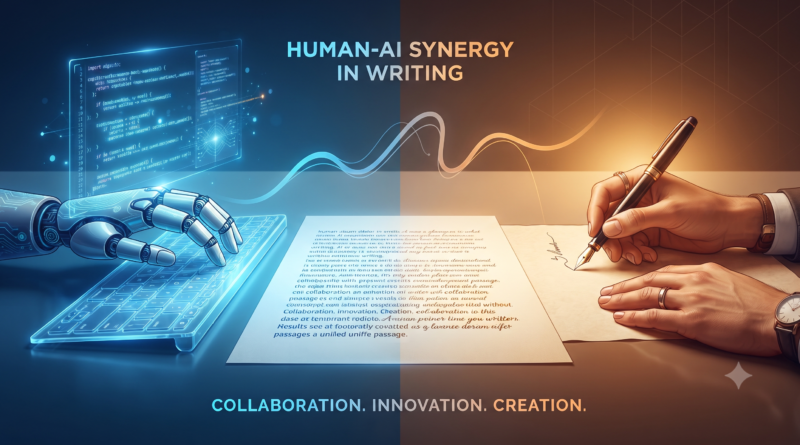
AI Writing vs. Human Writers: Why Human Expertise Still Wins
Competing with AI Writing vs. Human Writers has become one of the biggest discussions in modern digital communication and content marketing. It is no longer a theoretical debate — it directly influences digital marketing strategies, brand messaging, and how businesses balance AI writing services with human expertise to create high-performing content.
This article explores the evolving landscape of AI writing services and human writers, revealing why creativity, strategic thinking, emotional intelligence, and authentic storytelling continue to give human writers a unique competitive advantage in producing persuasive, trustworthy, and business-focused content that drives visibility in search engines and supports measurable ROI.
Why Businesses Are Adopting AI Writing Services
Companies adopt AI copywriting software due to reduced costs and increased efficiency. Marketing teams use it for scalable marketing copy, rapid idehttps://techfragger.com/how-to-scale-your-marketing-with-ai/ation, and simplified digital marketing execution across multiple platforms.
Still, automation often lacks audience psychology awareness, which limits emotional engagement and long-term brand messaging impact.

The Strengths of AI Content Creation
AI systems excel in structured content strategy, particularly when businesses need volume, speed, and SEO alignment. These systems enhance content performance by identifying keywords and generating optimized drafts quickly — making the comparison between AI and human writers an important strategic decision rather than a simple technology choice.
Speed and Scalability in Content Production
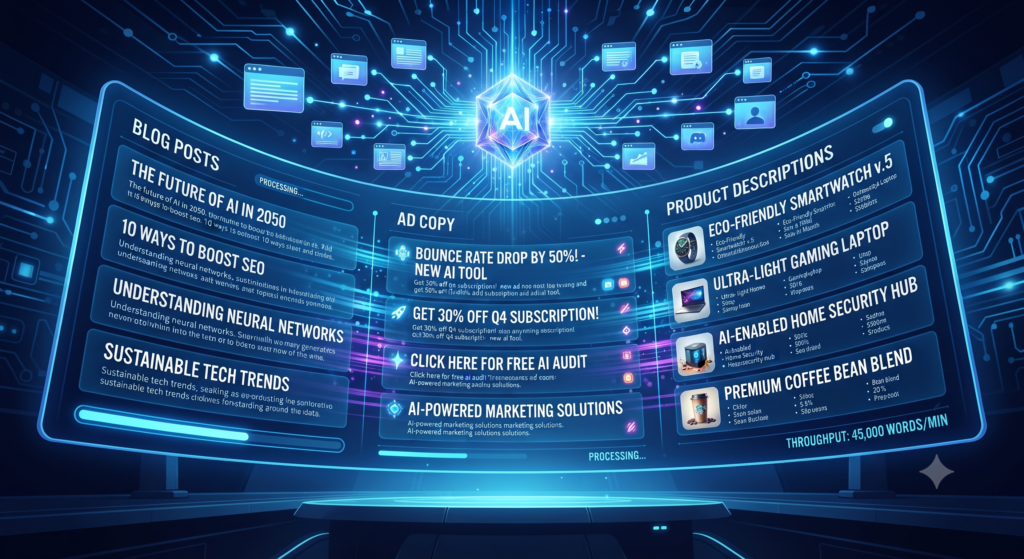
AI enables instant, automated content generation, producing blogs, ads, and product descriptions at scale. This capability supports high-demand content marketing campaigns where deadlines are tight and volume matters more than nuance.
However, speed sometimes sacrifices content quality and originality.
Data-Driven Content Optimization
Modern AI productivity tools analyze trends, search intent, and user behavior to refine conversion-focused content. This data-centric approach improves SEO performance, keyword targeting, and campaign optimization. Even so, businesses consistently find that combining AI efficiency with human creativity, strategic thinking, and authentic storytelling produces the strongest results.
Consistency in Brand Messaging
AI ensures uniform tone across all business communication, maintaining consistent brand messaging across platforms. This consistency helps enterprises manage large-scale campaigns without deviation in tone or structure.
Yet consistency does not always equal authenticity in content creation.
AI Writing vs Human Writers: Where AI Still Falls Short
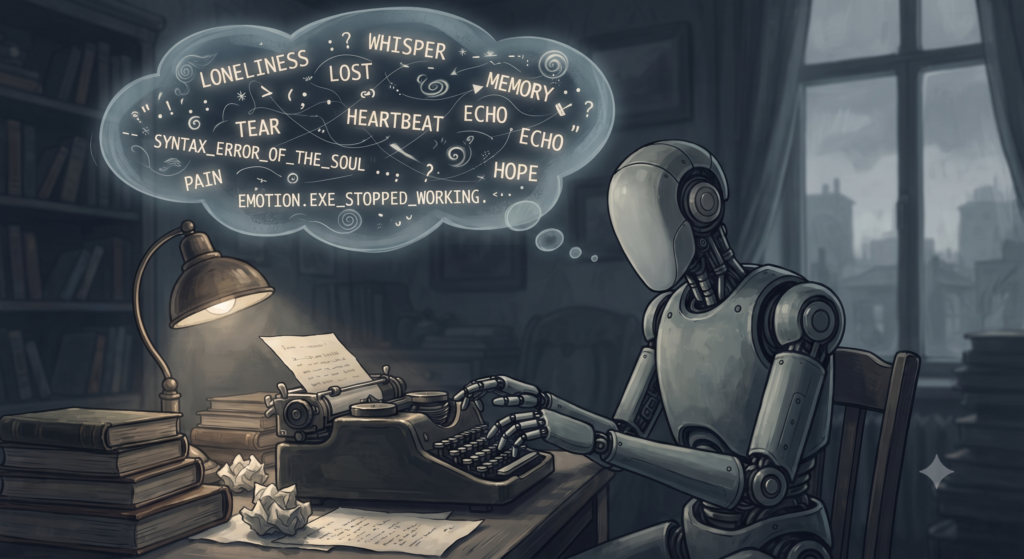
Despite advancements, AI-generated content struggles with emotional depth, contextual nuance, and real-world human insight. These gaps become visible in storytelling, persuasion, and strategic messaging.
- Lack of Emotional Intelligence and Human Creativity — AI cannot fully replicate emotional intelligence or the depth of creative writing. It lacks lived experience, which limits emotional storytelling and reduces audience engagement in emotionally driven industries. As a result, content may feel mechanical even when grammatically correct.
- Limitations in Strategic Thinking — AI systems struggle with advanced critical thinking. They may produce structured output but fail to understand the complex decision-making factors that influence human behavior and purchasing decisions, weakening their ability to produce persuasive content.
- Challenges in Authentic Brand Voice — Maintaining a unique author voice is difficult for AI. Many outputs appear generic, reducing brand authenticity and weakening content credibility in competitive markets where differentiation is crucial.
AI Writing vs Human Writers: What Businesses Actually Need
The real debate isn’t about replacement — it’s about relevance. Businesses need a balance between automation and human expertise to achieve meaningful marketing ROI.
AI provides scale; human writers deliver unique perspective and creativity. The contrast becomes clear: machines generate patterns, humans create meaning.
Business Communication Requires Human Insight
Strong customer experience depends on nuanced communication skills. Human writers understand emotional triggers, cultural context, and customer psychology, making communication more persuasive and relatable.
Human Expertise in Complex Industries
Fields like finance, healthcare, and law require subject matter expertise and precise fact-checking. Human writers ensure accuracy and editorial integrity, strengthening content credibility and professional trust.
The Unique Value Proposition Human Writers Bring
Human writers provide depth that AI cannot replicate. Their strength lies in creativity, judgment, and the ability to craft meaningful storytelling aligned with business objectives.

Creativity, Original Thinking, and Emotional Intelligence
Human writers excel in creative writing, producing original ideas shaped by experience. Their emotional resonance builds deeper audience engagement, making content memorable rather than mechanical — strengthening brand loyalty and trust.
Strategic Content Planning
Human professionals design long-term content strategy aligned with business goals. They understand positioning, messaging hierarchy, and how to influence customer relationships through consistent storytelling.
Human Judgment and Editorial Oversight
Human writers provide essential editorial oversight, ensuring accuracy, tone consistency, and ethical communication. Their quality assurance process refines raw ideas into polished, persuasive narratives.
Building Trust Through Human-Centered Content
Trust is the foundation of modern content marketing. Without it, even the best campaigns fail to convert or sustain engagement.
Emotional Storytelling Builds Customer Trust — Human storytelling creates emotional resonance that strengthens customer experience, transforming simple messages into meaningful narratives that influence purchasing decisions.
Authentic Content Drives Engagement — Authentic writing improves reader connection and increases retention, helping brands build authority in competitive markets.

How Human Writers Deliver Strategic Business Results
Human writers contribute directly to measurable outcomes like conversion rates, engagement, and brand positioning in digital marketing ecosystems.
- Conversion-Focused Content Strategy — Human-written conversion copywriting improves lead generation and sales performance by aligning messaging with audience psychology.
- Problem-Solving and Strategic Messaging — Human writers use critical thinking to solve communication challenges, ensuring content aligns with real-world business objectives.
- Content That Aligns With Business Goals — Effective content strategy connects messaging with marketing investment goals, ensuring alignment between storytelling and measurable outcomes.
Using AI as a Tool Instead of a Replacement
The future lies in collaboration. AI-assisted writing enhances productivity while humans maintain creativity and control over messaging direction.
AI-Human Collaboration in Content Creation
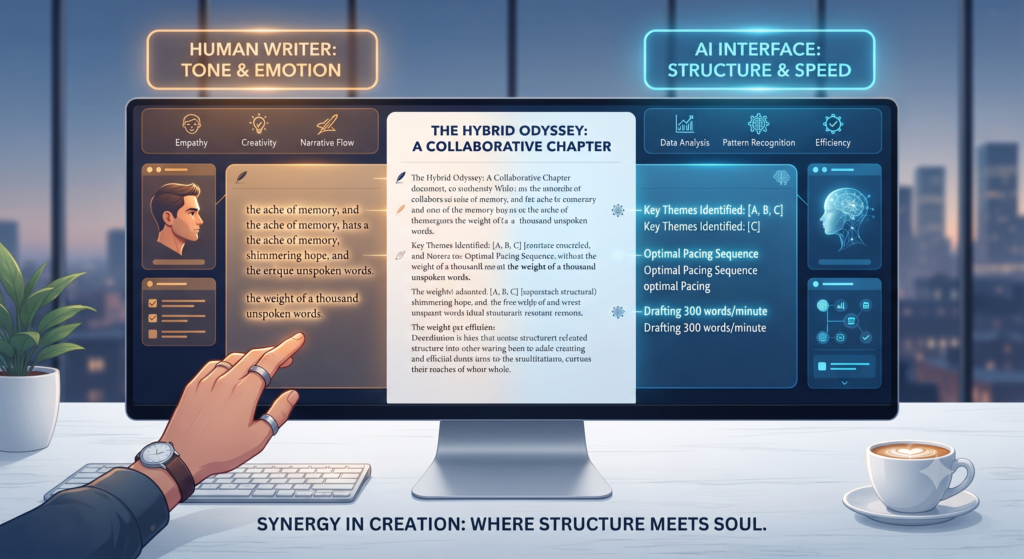
Modern teams use AI workflows to accelerate drafts while human writers refine structure and tone. This hybrid model improves efficiency and creativity simultaneously.
Prompt Engineering for Better Output
Effective prompt engineering improves AI performance, helping generate better-structured AI content and reducing editing time.
Human Editing and Refinement
Human editors ensure content quality by refining tone, removing inconsistencies, and enhancing emotional depth in final drafts.
Practical Ways Writers Can Compete with AI Writing Services
Writers must evolve by developing deeper expertise and focusing on skills AI cannot replicate:
- Developing Human-Centered Storytelling — Strong, meaningful storytelling builds emotional engagement. Writers must focus on experiences, not just information delivery.
- Strengthening Subject Matter Expertise — Deep industry knowledge enhances authority and credibility. Writers with real expertise outperform generic AI outputs in complex niches.
- Enhancing Strategic Thinking Skills — Writers must strengthen strategic thinking and align content with business objectives to remain competitive in the AI era.

The Future of Content: Human Expertise Enhanced by AI
The future of the content writing profession is hybrid — AI handles structure, while humans shape meaning, emotion, and strategy.
- AI will handle repetitive content tasks, freeing humans for higher-level creative work.
- Humans will lead strategic and creative work — storytelling and brand positioning that require emotional intelligence.
- The evolving digital marketing ecosystem will redefine content governance as AI workflows are integrated, improving efficiency while preserving authenticity.
Conclusion
The debate between AI writing and human writers isn’t really about competition — it’s about complementary strengths. AI delivers speed, scale, and data-driven optimization, while human writers bring creativity, emotional intelligence, strategic judgment, and authentic brand voice that machines simply cannot replicate.
Businesses that succeed in the years ahead won’t choose one over the other. They’ll build workflows where AI handles repetitive, high-volume tasks, and human writers focus on storytelling, strategy, and trust-building — the elements that turn content into genuine business results.
FAQs: Human Writers and AI Writing Services
Will AI replace human writers?
AI will assist but not replace human creativity or emotional intelligence in writing.
Can AI write better than humans?
AI is faster, but humans outperform in storytelling, persuasion, and nuance.
What is the value of human writers in the AI age?
They provide authenticity, strategy, and emotional depth in communication.
Why hire a human copywriter instead of AI?
For trust-building, brand voice consistency, and conversion-focused messaging.
What are the limitations of AI writing?
Lack of emotion, weak context, and generic content output.
How can writers compete with AI?
By focusing on creativity, expertise, and strategic storytelling.