Will AI Replace Digital Marketing? Here’s What Marketers Need to Know
This question has become one of the most discussed topics as artificial intelligence continues to reshape how businesses connect with customers. Every few years, a new technology transforms the marketing landscape, and today AI is leading that change.
From generating blog content to analyzing customer behavior in seconds, AI-powered marketing tools are helping businesses improve efficiency, personalize campaigns, and automate repetitive tasks.
As AI adoption continues to grow, many marketers and business owners wonder, Will AI Replace Digital Marketing? The reality is that AI is changing how marketing works rather than replacing the profession itself. While modern AI systems can handle data analysis, content assistance, and campaign optimization, they still require human creativity, strategic thinking, emotional intelligence, and brand expertise to deliver meaningful results.
Understanding the balance between automation and human expertise is essential for businesses preparing for the future. In this guide, you’ll explore the role of AI in modern marketing, its advantages and limitations, the skills marketers will continue to need, and the answer to the important question: Will AI Replace Digital Marketing?
What Does AI Mean for the Future of Digital Marketing?
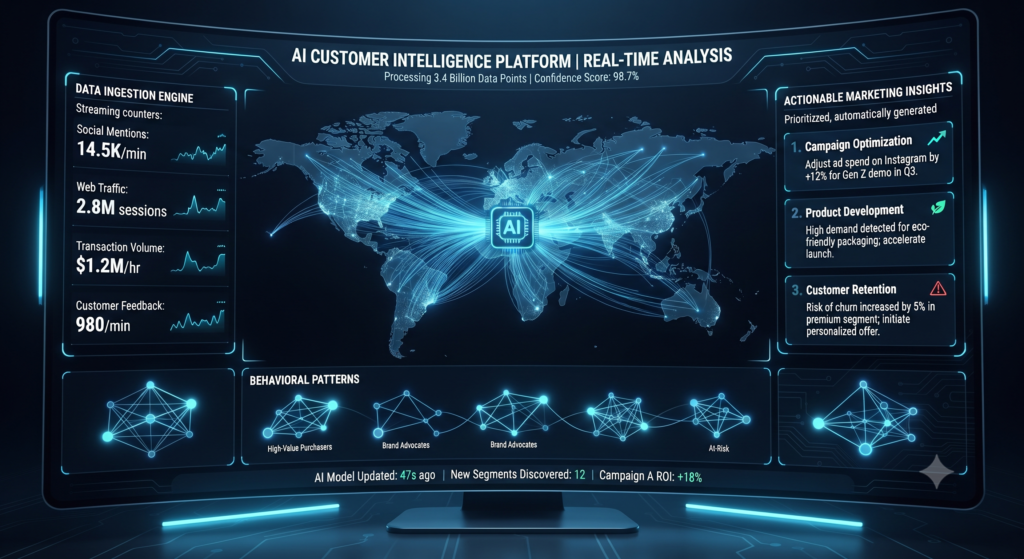
Artificial intelligence is no longer a futuristic idea. It is already changing how businesses attract, convert, and retain customers. A modern AI-driven marketing system can process millions of customer interactions within minutes.
It identifies buying patterns, predicts future behavior, and recommends the best marketing actions. As a result, brands can make faster decisions while improving campaign performance. This shift represents a major marketing transformation because companies now depend on data as much as creativity.
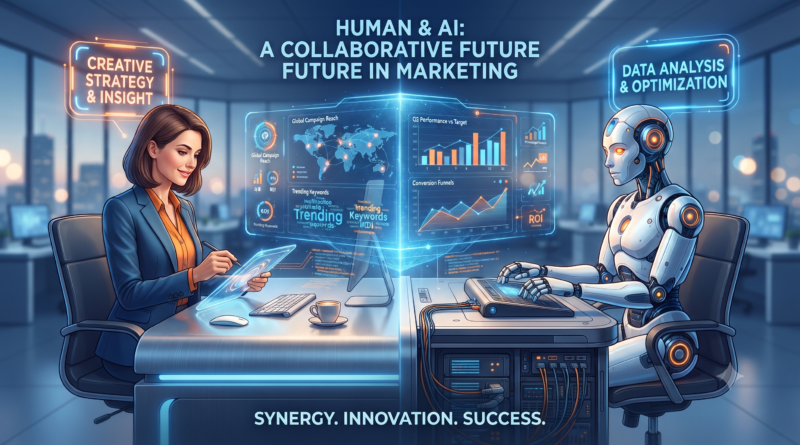
Will AI Replace Digital Marketing? Many experts believe the future belongs to organizations that combine intelligent technology with skilled marketing professionals rather than relying on AI alone.
However, technology alone cannot build successful brands. Customers still value trust, authenticity, and emotional connections. While AI handles repetitive work, marketers remain responsible for developing meaningful strategies that reflect customer needs.
Businesses are investing heavily in AI marketing strategy, AI marketing operations, and marketing workforce transformation to prepare for this new era. Rather than replacing people, AI is expanding what marketing teams can accomplish with fewer manual tasks and better decision-making. The growing influence of AI continues to raise the question, Will AI Replace Digital Marketing? The answer lies in how businesses balance automation with human creativity, strategic thinking, and customer understanding.
How AI Is Changing Digital Marketing Today
Artificial intelligence is already influencing almost every stage of the marketing process. From planning campaigns to measuring results, AI allows businesses to move faster and work more efficiently. Instead of spending hours gathering information, marketers now receive insights within seconds.
This efficiency enables companies to focus on innovation while improving customer satisfaction. Today’s AI-driven marketing workflows help businesses personalize content, automate campaigns, and increase overall productivity without sacrificing quality. As these capabilities continue to grow, many businesses are asking, Will AI Replace Digital Marketing? In reality, AI is reshaping how marketing works rather than eliminating the need for skilled professionals.
Another major advantage is continuous learning. Unlike traditional software, AI improves as it processes more information. This means every campaign generates valuable knowledge for future decisions. Modern organizations now depend on marketing automation, AI customer journey analysis, and marketing optimization to stay competitive. Companies that embrace these technologies are discovering new opportunities to reach customers in smarter and more meaningful ways.
AI-Powered Content Creation
Content creation has changed dramatically over the last few years. Modern Generative AI marketing platforms can write blog posts, generate advertising copy, suggest headlines, and even create social media captions within minutes. Tools like ChatGPT help marketers overcome writer’s block while producing ideas at remarkable speed. Businesses also use AI content generation to create product descriptions, email campaigns, and website content tailored to different audiences.
Even so, AI should be viewed as an assistant rather than a replacement. It can organize information and draft content quickly, yet it often lacks genuine storytelling and emotional depth. Human editors still refine the tone, verify facts, and ensure each message aligns with the company’s values.
This balance explains why the answer to Will AI Replace Digital Marketing? remains more complex than a simple yes or no. The strongest marketing content combines AI efficiency with human creativity, producing work that feels authentic rather than automated.

Marketing Automation
Marketing once required teams to perform countless repetitive tasks by hand. Today, marketing automation handles many of these responsibilities automatically. Businesses schedule emails, manage customer follow-ups, score leads, and trigger personalized campaigns without constant manual effort. This has made campaign automation one of the most valuable applications of AI in modern marketing.
Automation also supports end-to-end marketing automation, where multiple systems work together from lead generation to customer retention. AI analyzes customer behavior in real time and recommends the next best action. As a result, marketers spend less time on routine work and more time creating strategies that drive business growth. Instead of proving that Will AI Replace Digital Marketing? has a positive answer, automation demonstrates how AI enhances productivity while leaving strategic decision-making to humans.
AI in SEO and AI Search
Search engines are changing faster than ever before. Traditional SEO focused on ranking web pages through keywords and backlinks. Today, AI-powered search experiences are reshaping how users discover information. Features like AI search optimization, Google AI Overviews, and AI-powered search often answer questions directly, reducing the need for users to click multiple websites.
This evolution has introduced Generative Engine Optimization (GEO), a strategy designed to improve visibility in AI-generated responses. Understanding GEO vs SEO is becoming essential for marketers because AI assistants increasingly summarize trusted information instead of displaying only traditional search results. Businesses that create authoritative, well-structured content are more likely to appear in these AI-generated answers, making credibility more important than ever.
Customer Personalization and Analytics
Every customer follows a different buying journey. AI helps marketers understand those journeys by analyzing enormous amounts of behavioral data. Instead of sending identical messages to everyone, businesses now deliver personalized experiences based on interests, browsing history, and purchasing behavior. This level of AI personalization improves customer satisfaction while increasing conversion rates.
AI also strengthens predictive marketing analytics by forecasting future customer actions. Companies use customer behavior analysis, customer insights, recommendation engines, and marketing analytics to identify high-value audiences before competitors do. Combined with Customer Lifetime Value (CLV) predictions, these technologies help marketers invest their budgets more wisely while building long-term customer relationships.
As organizations continue adopting AI, the question Will AI Replace Digital Marketing? is likely to remain relevant, but the evidence suggests that AI is empowering marketers instead of replacing them.
How AI Is Changing Marketing: A Quick Comparison
| Traditional Marketing | AI-Driven Marketing |
|---|---|
| Manual audience research | AI audience segmentation |
| Generic campaigns | Personalized customer experiences |
| Weekly reporting | Real-time marketing analytics |
| Manual email campaigns | Automated email sequences |
| Human forecasting | Predictive marketing analytics |
| Basic customer targeting | Intelligent recommendation engines |
| Fixed campaign budgets | AI budget allocation |
| Manual optimization | Continuous AI learning |
“AI will not replace marketers. Marketers who use AI effectively will replace those who don’t.”
This statement reflects today’s marketing reality. Artificial intelligence excels at speed, automation, and data analysis. Human marketers continue to lead where creativity, empathy, ethical judgment, and strategic thinking matter most. The future belongs to professionals who know how to use AI as a tool rather than fear it as a threat.
Which Digital Marketing Tasks Can AI Replace?
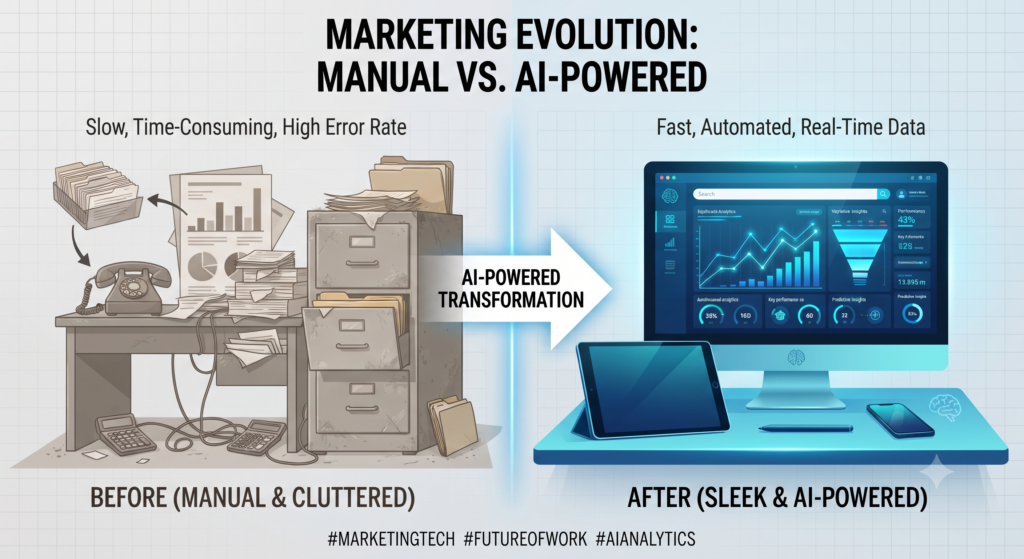
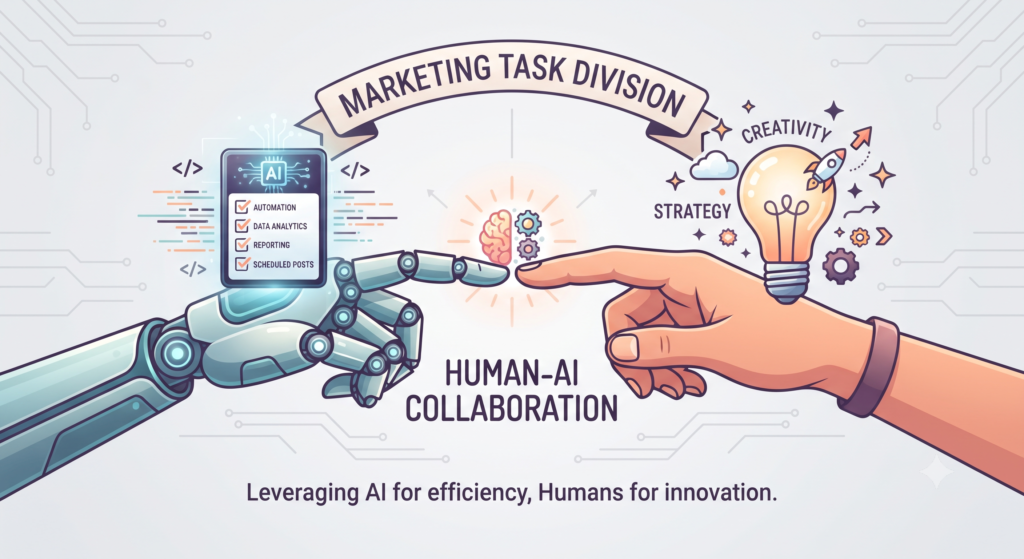
Artificial intelligence has become remarkably capable of handling repetitive marketing activities. Businesses now use AI marketing tools to save time, reduce costs, and improve campaign performance. However, replacing a task is different from replacing a profession. AI performs best when the work follows clear patterns and depends on large amounts of data. It struggles when emotions, originality, or complex decision-making are involved. That is why AI-driven marketing works as an assistant rather than a complete substitute for experienced professionals.
The biggest advantage of AI is speed. A task that once took hours may now take only minutes. Modern marketing automation, AI-driven marketing workflows, and marketing workforce automation allow teams to focus on planning instead of repetitive execution. As businesses continue adopting AI, understanding which activities can be automated helps marketers prepare for a future where humans and intelligent systems work side by side.
Content Writing
AI has transformed content production by creating first drafts for blogs, advertisements, emails, and product pages. Many companies use Generative AI marketing solutions to generate ideas, improve grammar, and optimize articles for search engines. AI also analyzes keywords, search intent, and audience preferences before suggesting content structures. This makes the writing process much faster than before.
Still, quality content requires more than correct grammar. Readers remember stories, opinions, and personal experiences that AI cannot genuinely create. Human editors improve tone, verify facts, and ensure every article reflects the brand’s personality. The strongest AI content marketing combines machine efficiency with human creativity, producing content that informs while building trust.
Email Marketing
Email remains one of the highest-performing digital marketing channels. AI now automates audience segmentation, subject-line testing, and personalized recommendations. Businesses rely on email automation, AI audience segmentation, and customer engagement tools to deliver relevant messages at exactly the right moment. This improves open rates while reducing manual effort.
AI also predicts when subscribers are most likely to respond. Instead of sending identical newsletters to everyone, marketers create personalized experiences based on customer behavior. Even so, successful email campaigns still require thoughtful messaging and compelling offers that resonate with real people rather than algorithms.
Social Media Management
Managing multiple social media accounts can quickly become overwhelming. AI simplifies this process by scheduling posts, generating captions, identifying trending topics, and recommending the best publishing times. Businesses increasingly use AI campaign management, AI content generation, and marketing optimization to maintain an active online presence without expanding their teams.
However, social media is built on conversation. Customers expect empathy, humor, and authentic interaction. AI can answer routine questions, yet it often misunderstands cultural context or emotional situations. Community managers remain essential because they build genuine relationships that strengthen customer loyalty over time.
PPC Campaign Optimization
Paid advertising depends on continuous testing and optimization. AI analyzes millions of performance signals to improve bids, keywords, and targeting automatically. Platforms such as Google Ads and Meta Ads already use machine learning to support AI budget allocation, conversion optimization, and programmatic advertising. This allows campaigns to improve even while marketers focus on broader business goals.
AI also identifies audience segments that humans may overlook. Through continuous learning, advertising systems adjust budgets and placements in real time. Although automation improves efficiency, experienced marketers still decide campaign objectives, messaging strategies, and overall brand direction.
Data Analysis and Reporting
Marketing generates enormous volumes of information every day. AI transforms this raw data into practical insights within seconds. Businesses now depend on marketing decision intelligence, marketing attribution, multi-touch attribution, and Marketing ROI AI to understand which campaigns generate real business value. Reports that once required days of manual work are now available instantly.
Beyond reporting, AI predicts future outcomes using historical trends. This allows marketers to adjust campaigns before problems appear. While AI excels at finding patterns, people remain responsible for interpreting results and connecting data with business objectives. Numbers alone never tell the complete story.
What AI Cannot Replace in Digital Marketing
Despite impressive progress, artificial intelligence still has clear limitations. Marketing is not only about efficiency. It is also about understanding emotions, solving unexpected problems, and creating memorable experiences. AI can analyze customer data, yet it cannot genuinely understand human feelings. This difference explains why successful businesses continue investing in skilled marketing professionals alongside intelligent software.
Another important factor is accountability. Every marketing decision influences brand reputation and customer trust. While AI provides recommendations, humans remain responsible for evaluating risks and making ethical choices. The future belongs to companies that balance technology with wisdom rather than relying entirely on automation.

Creativity and Brand Storytelling
Every successful brand tells a memorable story. Think about companies that inspire loyalty. Their customers remember emotions instead of product features. AI can imitate writing styles, yet it cannot create experiences drawn from real life. Genuine storytelling comes from human imagination, curiosity, and empathy.
Creativity also involves taking risks. Some of history’s most successful campaigns succeeded because marketers ignored predictable patterns. AI depends on existing data, whereas people imagine possibilities that have never existed before. This creative spark remains one of the greatest competitive advantages for modern businesses.
Strategic Marketing Decisions
Marketing strategy requires balancing customer needs, company goals, market trends, and competitive pressure. AI processes information quickly, yet strategy involves judgment that extends beyond numbers. Developing an effective AI marketing strategy requires leaders who understand long-term business priorities and customer expectations.
Strategic planning also demands flexibility. Markets change suddenly because of economic events, regulations, or cultural shifts. Human leaders adapt through experience and intuition. AI provides recommendations, but executives make the final decisions that shape the future of the organization.
Human Relationships and Trust
Customers prefer brands they trust. Trust develops through honesty, empathy, and consistent communication. AI answers questions efficiently, yet genuine relationships depend on human interaction. Whether resolving complaints or negotiating partnerships, people expect understanding that extends beyond automated responses.
Relationship marketing also creates long-term loyalty. A helpful conversation during a difficult situation often strengthens customer confidence more than perfect automation. This emotional connection remains one of the strongest reasons why marketers continue playing a central role in business success.
Ethical Judgment and Brand Reputation
Artificial intelligence makes decisions based on data rather than values. Sometimes this creates ethical concerns involving privacy, fairness, or misinformation. Businesses therefore emphasize AI accountability, brand safety, and responsible governance whenever AI participates in customer communications.
Strong companies establish clear policies before deploying AI across marketing operations. Human oversight protects customer trust while ensuring compliance with legal and ethical standards. Responsible innovation always combines technological capability with thoughtful leadership.
AI vs Human Marketers: Who Performs Better?
The debate between AI and human marketers often creates unnecessary conflict. The reality is much simpler. Each performs exceptionally well in different areas. AI processes information at incredible speed, while humans provide imagination, empathy, and strategic judgment. The most successful organizations combine both strengths instead of treating them as competitors.
A useful comparison is the relationship between an airplane and its pilot. Advanced technology makes flying safer and more efficient, yet passengers still expect a trained professional to guide the journey. Marketing follows the same principle. AI improves execution, while people define purpose, direction, and values.
| Capability | AI | Human Marketers |
|---|---|---|
| Data processing | Excellent | Moderate |
| Creativity | Limited | Excellent |
| Emotional intelligence | Very Limited | Excellent |
| Speed | Excellent | Moderate |
| Strategic thinking | Moderate | Excellent |
| Customer relationships | Limited | Excellent |
| Pattern recognition | Excellent | Good |
| Ethical judgment | Limited | Excellent |

How AI Is Transforming SEO and Search Marketing
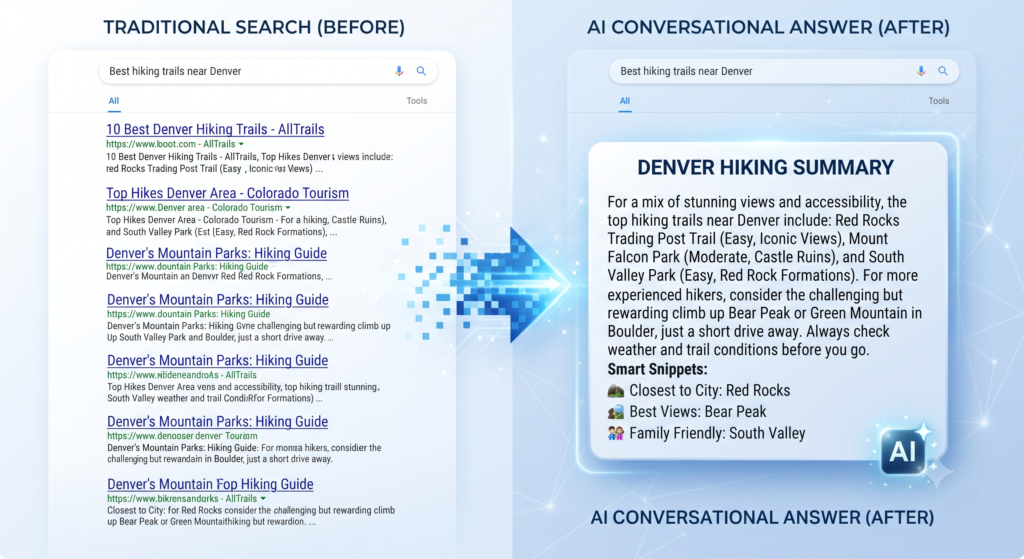
Search marketing is experiencing one of its biggest changes in decades. Traditional search engines displayed lists of web pages. Today’s AI-powered systems increasingly provide direct answers. This shift changes how businesses attract website visitors and build online authority. Modern marketers now optimize content not only for search engines but also for AI assistants.
This transformation encourages businesses to publish accurate, trustworthy, and well-structured information. Search visibility increasingly depends on expertise instead of keyword repetition. Companies that invest in authoritative content will remain competitive as search technology continues evolving.
Generative Engine Optimization (GEO)
Generative Engine Optimization (GEO) has emerged because AI assistants summarize information instead of simply listing websites. Unlike traditional SEO, GEO focuses on creating content that AI systems recognize as reliable, accurate, and valuable. Understanding GEO vs SEO helps businesses adapt to changing search behavior before competitors do.
GEO encourages clear writing, factual accuracy, structured headings, and strong topical authority. Brands that consistently publish expert content improve their chances of appearing in AI-generated responses. This increases brand visibility in AI responses while strengthening long-term digital authority.
AI Search Optimization
Consumers increasingly ask questions directly to AI assistants rather than typing short keywords into search engines. This trend has accelerated interest in AI search optimization, AI-powered search, and conversational experiences. Businesses must therefore create content that answers complete questions naturally while demonstrating genuine expertise.
Modern search also rewards context over keyword stuffing. AI evaluates meaning instead of isolated phrases. Organizations that understand customer intent produce more valuable content while earning greater visibility across emerging AI search platforms.
The Future of SEO in an AI-First World
Many marketers ask whether traditional SEO is disappearing. The answer is more balanced. SEO is evolving instead of becoming obsolete. Concerns about search engine optimization decline overlook the fact that AI still depends on trustworthy online content. Without quality websites, AI would have little reliable information to summarize.
The future belongs to businesses combining SEO with GEO. High-quality articles, original research, expert opinions, and structured content will continue attracting both search engines and AI assistants. Rather than replacing SEO, artificial intelligence is encouraging marketers to create better content that genuinely helps readers.
Conclusion: Will AI Replace Digital Marketing or Transform It?
The question “Will AI replace digital marketing?” has become more important as artificial intelligence continues to reshape the business world. After exploring every aspect of modern marketing, one conclusion stands out clearly. AI is not replacing digital marketing. Instead, it is transforming how marketers work, make decisions, and connect with customers.
Today’s AI in marketing solutions handle repetitive tasks, improve marketing automation, strengthen AI-driven marketing, and deliver faster insights than ever before. Yet they still depend on human expertise to create meaningful strategies, memorable stories, and trusted customer relationships.
The future belongs to businesses that embrace collaboration between people and technology. Successful organizations will use AI marketing tools, AI marketing strategy, and Generative AI marketing to increase productivity while allowing marketers to focus on creativity, innovation, and leadership.
As AI search optimization, Generative Engine Optimization (GEO), and intelligent automation continue evolving, companies that invest in learning and adaptation will gain a lasting competitive advantage. Rather than fearing AI, marketers should see it as a powerful partner that opens new opportunities for growth. The smartest marketing teams will not compete against AI. They will learn how to work with it.
Frequently Asked Questions
Will AI replace digital marketers?
No. AI will not completely replace digital marketers. It will automate repetitive work such as reporting, keyword research, campaign optimization, and content drafting. However, businesses still need professionals to develop AI marketing strategy, manage brand reputation, understand customer emotions, and make complex business decisions. The future of human vs. AI marketing is collaboration rather than replacement.
Can AI run an entire marketing campaign?
AI can manage many campaign activities including audience targeting, campaign automation, budget optimization, content generation, and performance reporting. However, it cannot independently build a complete business strategy or understand changing customer emotions. Human oversight remains essential for creative direction, ethical decision-making, and long-term business success. The strongest campaigns combine AI-driven marketing workflows with experienced marketing leadership.
Is SEO becoming obsolete because of AI?
No. SEO is evolving rather than disappearing. AI-powered search has introduced Generative Engine Optimization (GEO) and AI search optimization, which complement traditional SEO practices. Businesses must now create authoritative, trustworthy, and well-structured content that serves both search engines and AI assistants. High-quality information remains the foundation of online visibility.
What marketing jobs are safest from AI?
Roles that require creativity, leadership, relationship building, and strategic thinking are the most secure. Brand strategists, marketing directors, creative leaders, customer experience specialists, and consultants continue providing value that AI cannot fully replicate. As marketing workforce transformation accelerates, professionals who combine technical knowledge with communication and problem-solving skills will remain in high demand.
Which AI tools are best for digital marketing?
Popular AI platforms include ChatGPT for content creation, Google Gemini for productivity, Claude for long-form writing, HubSpot for marketing automation, Salesforce for customer relationship management, Canva AI for visual design, Jasper AI for copywriting, Google Analytics 4 for analytics, Semrush and Ahrefs for SEO research, and Microsoft Copilot for workplace productivity. The best choice depends on your business goals, budget, and existing marketing technology stack.
How can marketers prepare for the future of AI?
Marketers should focus on continuous learning instead of fearing automation. Developing skills in predictive marketing analytics, AI audience segmentation, AI content marketing, data analysis, prompt engineering, and AI marketing operations will increase career opportunities. At the same time, strengthening creativity, storytelling, leadership, and customer relationship skills will ensure you remain valuable as the future of digital marketing continues to evolve.